
California bluebell
Phacelia campanularia A. Gray
Description
Sowing dates
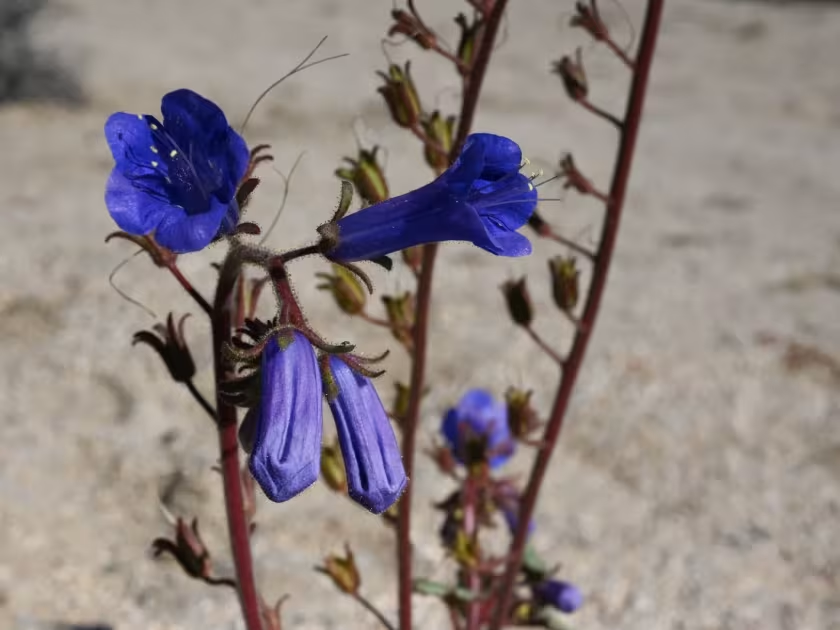
California bluebell (Phacelia campanularia) is an annual plant belonging to the Boraginaceae family, native to the deserts of California and often grown for its deep blue bell-shaped flowers.
Seeds should be sown directly into the garden in early spring once the danger of frost has passed and the soil has warmed up to at least 10 degrees Celsius.
The seeds are relatively small and require a shallow planting depth of about 5 millimeters, as they need a bit of exposure to light to trigger the germination process.
Spacing is important; for the best display, plants should be thinned or spaced at least 20 to 30 centimeters apart to allow for proper air circulation.
The growth cycle is relatively rapid, with plants typically reaching their full flowering stage within two to three months after the initial sowing date.
Growing requirements
This species thrives in full sun exposure, which is essential to produce the vibrant indigo color of the blossoms and to prevent weak, leggy stems.
Soil conditions should ideally be sandy or rocky, mimicking the plant's native desert habitat, and must have excellent drainage to prevent any root rot issues.
While it is tolerant of poor, nutrient-depleted soils, it will perform best in locations where the substrate is light and not prone to compaction or waterlogging.
Watering requirements are low; once established, the plant is quite drought-tolerant and should be watered only when the top layer of soil becomes completely dry.
Fertilizer is generally not necessary, and excessive fertilization may lead to rapid leaf growth while reducing the intensity and duration of the floral display.
Main diseases and pests
California bluebell is remarkably hardy and resistant to most common garden pests, provided that the environmental conditions match its natural preferences.
The primary concern for this crop is excessive moisture, which can easily lead to root rot or fungal infections if the planting site lacks proper drainage.
Slugs and snails may occasionally feed on young seedlings in moist environments, making it necessary to monitor the garden area closely during the early growth phase.
Avoiding overhead watering helps minimize the risk of developing powdery mildew, which can occur if the foliage remains wet for extended periods.
To keep the plants healthy, ensure that there is adequate space between individual specimens to facilitate proper ventilation and keep the root zone relatively dry.