
Brunnera hybrids
Brunnera hybrids
Description
Growing requirements
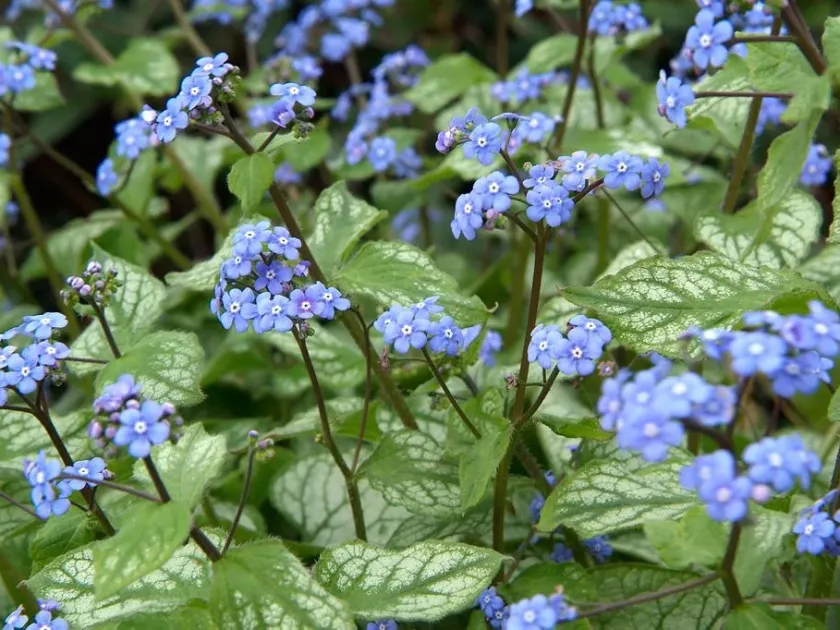
Brunnera hybrids are a group of ornamental perennial plants belonging to the Boraginaceae family. These cultivars are highly valued by gardeners for their variegated or silvered foliage and delicate, blue, forget-me-not-like flowers that appear in spring.
The culture thrives best in moist, fertile, and well-drained soils. While they are adaptable, they perform best in soils rich in organic matter. Maintaining consistent soil moisture is crucial, especially during the peak of the growing season.
As woodland plants, these hybrids have strict requirements regarding light. They should be planted in partial to full shade. Direct sunlight, particularly in the afternoon, can cause leaf scorch and compromise the plant's aesthetic appeal.
Standard agrotechnical practices involve yearly mulching to conserve soil moisture and suppress weed growth. Propagation is typically achieved through division of established clumps in early spring or autumn to maintain plant vigor.
In landscaping, Brunnera hybrids are utilized as ground covers and border plants in shade gardens. Their ability to brighten up dark corners of the landscape makes them a staple choice for garden designers worldwide.
Main diseases and pests
Slugs and snails are the most common pests affecting Brunnera hybrids. They consume the leaf tissue, leaving characteristic holes. Using non-toxic traps or physical barriers can effectively manage these populations in a small garden setting.
Powdery mildew is the primary fungal threat, appearing as a dusty white coating on leaves. This disease is usually triggered by poor air circulation and high humidity levels during warm summer evenings.
Bacterial or fungal leaf spot diseases can occur if the foliage remains wet for too long without adequate ventilation. To minimize these risks, watering at the base of the plant rather than overhead is recommended.
In cases of severe infestation, targeted application of organic fungicides or insecticides is necessary. It is crucial to follow the label directions carefully to protect beneficial insects that may visit the garden.
Maintaining a clean garden environment by removing dead foliage after the first frost helps reduce the likelihood of overwintering pathogens. Keeping plants healthy through proper fertilization ensures better natural resistance to threats.