
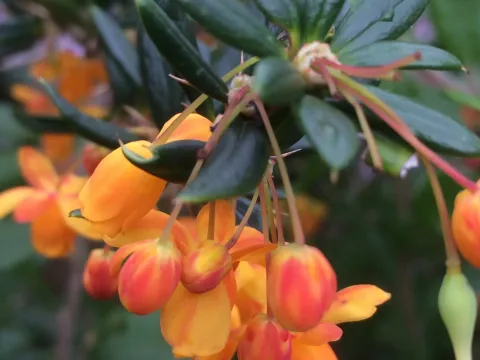
Lolog barberry
Berberis lologensis
Lolog barberry (Berberis lologensis) is a rare and highly decorative evergreen shrub belonging to the Berberidaceae family. Native to the mountainous regions near Lake Lolog in Argentina and Chile, it is prized for its dense growth habit and elegant appearance.
What the section contains
Lolog barberry
Botanically, this shrub features sturdy, leathery foliage that provides year-round color. It produces showy, bright yellow flowers in spring, often appearing in clusters that contrast beautifully with the dark green leaves, followed by dark, often bloom-covered berries.
The plant thrives in well-drained, fertile soil with a slightly acidic to neutral pH level. It is essential to ensure that the site does not have waterlogging issues, as the roots are sensitive to excessive moisture, which can lead to fungal complications.
When it comes to climate requirements, Lolog barberry prefers temperate conditions with moderate winters. While it is hardy, it benefits from being planted in a spot sheltered from harsh, drying winds, which can desiccate the evergreen foliage during colder months.
Proper maintenance involves a steady watering schedule during the establishment phase and regular application of balanced organic fertilizers. Pruning should be performed carefully, primarily to maintain the natural shape of the shrub and remove any dead or crossing branches.
The most significant threats to Berberis lologensis include fungal diseases like powdery mildew, particularly in humid or stagnant air environments. Good airflow management through strategic pruning is the most effective preventative measure against these infections.
Pests such as aphids and spider mites can occasionaly infest the tender new growth. Regular inspection and the use of insecticidal soaps or neem oil, applied in the early stages of infestation, are usually sufficient to manage these populations effectively.
Bacterial blight may cause unsightly spots or tissue death on the stems. If such symptoms are noted, prompt removal of affected parts, followed by strict tool sanitation with isopropyl alcohol, is necessary to prevent further spread throughout the specimen.
Root rot is a critical risk if the soil drainage is inadequate. Always check for signs of wilting that do not improve with normal watering, as this may indicate damage to the root system below the soil surface.
Winter protection is recommended in regions with temperatures dropping significantly below the plant's hardiness threshold. Using a layer of mulch around the base protects the root crown from extreme freeze-thaw cycles that can heave the soil.