
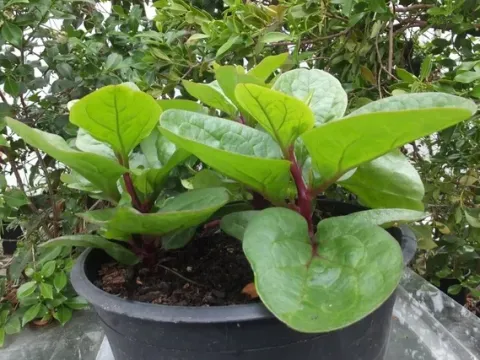
Malabar spinach
Basella paniculata
Basella alba is a perennial vine typically grown as an annual crop in temperate climates. For optimal results, seeds should be started indoors 6 to 8 weeks before the last expected frost date.
What the section contains
Malabar spinach
The seeds have a hard seed coat, so soaking them in lukewarm water for 24 hours prior to planting significantly improves germination rates and ensures more uniform seedling emergence.
Seeds are sown in a light, well-draining potting mix at a depth of about 0.5 to 1 cm. Containers should be placed in a warm environment with temperatures maintained between 22 and 25 degrees Celsius.
Once the seedlings develop two or three sets of true leaves, they should be transplanted into larger individual pots to prevent root crowding and promote vigorous vegetative growth before the final planting.
Hardening off the seedlings is a crucial step before moving them outside. They should only be transplanted into the garden when night temperatures consistently stay above 15 degrees Celsius.
Malabar spinach thrives in hot, humid climates. It is a true tropical plant that requires full sun exposure and warm temperatures, ideally between 25 and 35 degrees Celsius, to reach its full potential.
The soil should be rich in organic matter, such as compost or well-rotted manure, and have a slightly acidic to neutral pH. Excellent drainage is essential to prevent waterlogging, which the plant detests.
Since Basella alba is a climbing vine, it requires sturdy trellises, nets, or stakes to support its rapid growth. Without support, the plant will sprawl on the ground, making it prone to rot and pests.
Consistent soil moisture is vital for producing succulent, tender leaves. During peak summer, deep watering is necessary to prevent the leaves from turning bitter and leathery due to water stress.
The plant is highly responsive to regular nitrogen-based liquid fertilizers, which help maintain the dark green color and speed up the production of new edible shoots throughout the growing season.
Malabar spinach is incredibly productive, often outperforming many standard lettuce or spinach varieties in hot summer conditions where other greens would bolt and go to seed.
The harvest consists of succulent, heart-shaped leaves and soft stem tips. The texture is slightly mucilaginous, which adds a unique body to soups and stews, similar to okra.
Yield can be maximized by frequent harvesting of the growing tips. Pruning the vine encourages branching, which creates a denser plant and significantly increases the total weight of the edible harvest.
Under optimal tropical conditions, a single plant can provide several kilograms of nutritious greens over a long harvest season, provided that it is continuously pruned and well-watered.
The plant grows vigorously until the first cool temperatures of autumn, at which point its metabolism slows down, making it the perfect time for the final harvest of the remaining foliage.
The primary challenges when growing Basella alba are related to fungal diseases such as leaf spots or grey mold, which can occur if there is poor air circulation and excessive humidity around the foliage.
Common garden pests include aphids, whiteflies, and spider mites, especially in greenhouse or indoor setups where temperatures are high and the air remains stagnant for long periods.
Slugs and snails can be problematic for younger plants, particularly when they are first established in the garden. Protective measures such as barriers or organic slug bait can be used.
Maintaining proper spacing between plants is the most effective preventative measure against disease. Proper airflow keeps the leaves dry and reduces the chances of pathogen proliferation.
Due to the plant's use as a fresh leafy green, it is highly recommended to use integrated pest management (IPM) strategies, favoring mechanical or biological controls over synthetic pesticides.
Harvesting should begin when the plant is well-established, usually 60 to 80 days after transplanting. It is best to harvest in the cool early morning to ensure the leaves remain crisp.
Use clean, sharp scissors or pruning shears to harvest the top 10–15 cm of the vine. This method allows the plant to continue growing while providing a steady supply of fresh, tender greens.
The harvested leaves and stems should be consumed as soon as possible. If storage is required, they can be kept in a perforated plastic bag in the refrigerator for up to three days.
In addition to fresh consumption in salads, Malabar spinach is excellent for stir-fries, soups, and curries, where its natural thickening properties are highly valued in many traditional cuisines.
For long-term storage, the leaves can be blanched briefly, drained, and then frozen. This preserves the nutritional value and texture, making them suitable for use in cooked dishes during the winter.