
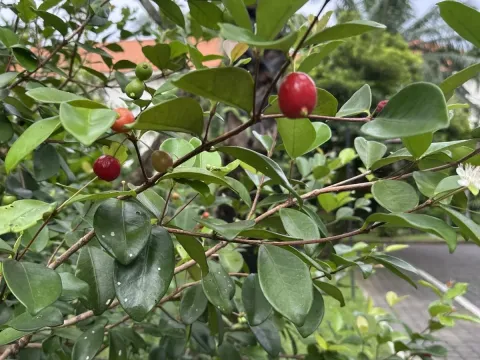
Barbados cherry
Malpighia punicifolia
Barbados cherry (Malpighia punicifolia), commonly known as acerola, belongs to the Malpighiaceae family. This evergreen shrub is widely recognized for its exceptional nutritional value, specifically its incredibly high natural vitamin C content.
What the section contains
Barbados cherry
Native to the tropical regions of the Western Hemisphere, including the Caribbean, Central, and South America, the plant thrives in warm, frost-free climates. It is sensitive to cold temperatures, which restricts its outdoor cultivation to tropical and subtropical zones.
The crop demands well-drained soil with a slightly acidic to neutral pH. While it displays remarkable drought tolerance once established, consistent irrigation during the fruit-set phase is vital for maximizing harvest yield and fruit size.
Sunlight exposure is critical for the metabolic processes of the shrub. Plantations should be situated in full sun, with adequate spacing between rows to promote air circulation, which is essential for healthy growth and effective cross-pollination by insects.
Economically, the cultivation is targeted towards the pharmaceutical and nutraceutical industries. The demand for natural vitamin C supplements drives the commercial expansion of acerola orchards globally.
Root-knot nematodes represent the most significant threat to the root system, often resulting in reduced vigor and stunted growth. Implementing integrated pest management strategies, such as soil solarization or resistant rootstocks, is crucial for orchard longevity.
Leaf spot diseases and anthracnose are common in high-humidity conditions, particularly during the rainy season. Proper pruning practices, which improve light penetration and airflow through the canopy, are the primary cultural methods used to mitigate these risks.
Harvesting is labor-intensive as the fruit is highly perishable and delicate. The timing of the harvest is determined by the skin color change, moving from green to bright red, which indicates peak ripeness and optimal nutrient concentration.
Post-harvest management involves rapid cooling to slow down the degradation of vitamin C. Due to the rapid spoilage of the fresh fruit, processors typically focus on immediate freezing or spray-drying the pulp for the supplement market.