
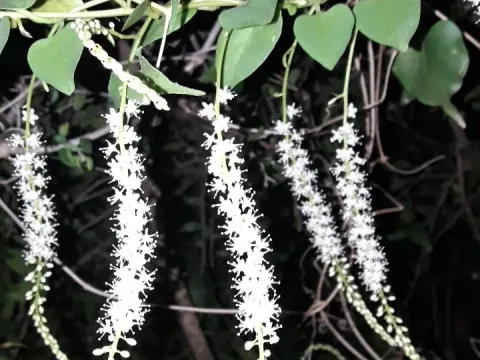
Madeira-vine
Anredera
Anredera cordifolia, widely known as the Madeira-vine, is a perennial vine that exhibits rapid growth. Propagation is primarily achieved through aerial tubers that develop in the leaf axils, or through the division of fleshy rhizomes during the dormant season.
What the section contains


Madeira-vine
The ideal time for planting is early spring, once the soil has warmed sufficiently. Burying the tubers a few centimeters deep into well-drained soil ensures optimal conditions for shoot emergence and establishment of the root system.
In temperate zones, planting should only occur after all risks of frost have passed. The Madeira-vine is highly sensitive to freezing temperatures, which can severely damage or kill the succulent growth if not protected appropriately.
When starting from seeds, use a warm greenhouse environment with temperatures around 20-25 degrees Celsius. Seeds should be sown in a high-quality, sterile potting mix and kept consistently moist until germination occurs.
Vertical structures such as trellises or sturdy supports are essential for the healthy development of this climber. Proper spacing of 40-50 cm between plants is recommended to allow for adequate air circulation and to minimize the risk of fungal diseases.
The Madeira-vine thrives in fertile, loamy soil with a neutral pH. It is crucial to provide a substrate with excellent drainage, as waterlogged conditions quickly lead to tuber decay and the death of the plant.
While the plant prefers full sun for vigorous growth, partial shade is beneficial in regions with intense summer heat. Excessive exposure to mid-day sun in arid climates can scorch the leaves and reduce the plant's overall vitality.
Anredera requires a frost-free climate to reach its full potential. It performs best in tropical or subtropical conditions where temperatures remain between 20 and 30 degrees Celsius throughout the growing period.
Watering needs are moderate but consistent. During dry spells, the soil should be kept lightly moist, but growers must avoid overwatering. Applying mulch around the base of the plant helps retain soil moisture and suppresses weed growth.
Regular fertilization with a balanced, organic-based fertilizer supports both foliage development and the expansion of underground tubers. Supplemental potassium is particularly beneficial later in the season to improve the quality of the harvest.
The total yield of the Madeira-vine consists of its edible leaves and nutrient-rich tubers. By the second year of cultivation, well-established plants produce a significantly larger quantity of tubers compared to the first year.
The foliage is edible and widely appreciated for its mild taste, similar to spinach. Culinary uses include raw consumption in salads or cooked applications in stir-fries and soups, providing a valuable source of nutrients.
Tubers are the primary harvestable storage organs of the plant. They are rich in starches and mucilage, making them a dense energy source that can be harvested once the plant enters its seasonal dormancy.
Maximum yield depends heavily on providing sufficient vertical support. When allowed to climb, the plant photosynthesizes more efficiently, leading to larger tuber size and a more robust overall biomass production.
Managing the plant's energy allocation is key. Growers who prioritize tuber harvest often remove excessive flowers to ensure the plant directs its resources toward underground storage rather than reproductive efforts.
Fungal issues such as powdery mildew are common in conditions with high humidity and poor airflow. Regular inspection and the application of appropriate organic fungicides help manage these outbreaks effectively.
Root rot is the most significant threat to tuber health, usually resulting from excessive irrigation or heavy, compacted soil. Proper drainage is the primary defense against this destructive condition.
Aphids and spider mites are potential pests that attack the soft, green shoots. Early detection is critical, and growers can use neem oil or insecticidal soaps to mitigate population growth without damaging the plant.
Slugs and snails may feed on the tender young leaves, especially during the wet spring months. Implementing physical barriers such as copper tape or crushed eggshells can protect the crop from these common garden pests.
Nematode infestations can occur in areas where crop rotation is neglected. Maintaining clean garden hygiene and removing all plant residues at the end of the season are essential practices for long-term soil health.
Tubers should be harvested in late autumn, once the above-ground vines have turned yellow and withered due to cooling temperatures. Harvesting on a dry day prevents excess moisture from clinging to the tubers.
Using a garden fork is the safest method to extract tubers from the soil, minimizing mechanical damage. Any tubers accidentally pierced during harvest should be consumed quickly to prevent fungal infection.
Post-harvest, the tubers require a curing period of a few days in a shaded, ventilated area. This process hardens the skin, allowing for better preservation and storage throughout the cooler months.
Leaf harvesting can be performed continuously during the growing season. It is recommended to prune only the most vigorous outer leaves, ensuring the plant remains healthy enough to continue producing for the duration of the cycle.
For long-term storage, the cured tubers should be placed in crates filled with dry sand or peat moss in a cool, dark, and well-ventilated room. Maintaining a temperature of 5-10 degrees Celsius prevents sprouting and dehydration.