
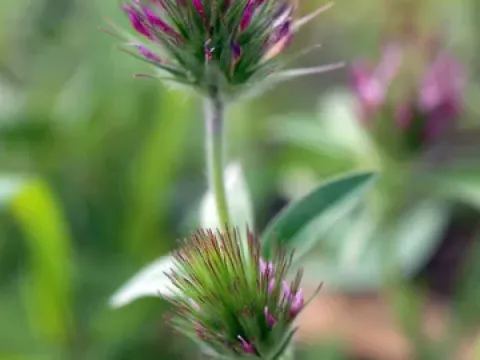
Beautiful clover
Trifolium formosum
Sowing of Trifolium formosum is primarily carried out in early spring, once the soil has warmed to a temperature of 6–8°C, which ensures uniform germination and proper plant rooting.
What the section contains
Beautiful clover
Late autumn sowing is also permitted in regions with milder climates, allowing the seeds to undergo natural stratification and sprout as early as possible with the arrival of warmth.
The seeding rate depends on soil type and the planting method, averaging between 12 and 16 kg per hectare when establishing seed plots or forage pastures using standard row methods.
Clover seeds require precise soil covering to a depth of no more than 1–2 centimeters, as planting too deep can significantly reduce the crop's field emergence rate.
After sowing, it is recommended to roll the field to improve the contact between seeds and soil moisture, which is critical for achieving uniform and robust seedlings during dry periods.
Beautiful clover belongs to the Fabaceae family and is a perennial herbaceous plant adapted to temperate climatic conditions and sunny, well-drained slopes.
The crop has moderate requirements for soil moisture but tolerates prolonged water stagnation poorly, so fields must be equipped with adequate drainage systems.
Optimal soils for cultivation are loams or sandy loams with a neutral or slightly acidic pH, which promotes the development of nodule bacteria on the root system.
The plant exhibits high frost resistance and is capable of successfully overwintering under a stable snow cover, maintaining root viability into the spring season.
Light exposure is a critical factor: when shaded, the growth intensity of the clover decreases noticeably, making it a preferred crop for open fields and grazing areas.
The green mass yield of Trifolium formosum depends directly on soil fertility levels and the regularity of atmospheric precipitation throughout the vegetative period.
With intensive management and the application of balanced mineral fertilizers, particularly phosphorus and potassium, it is possible to achieve multiple full harvests within a single season.
Seed yield indicators are generally lower compared to other clover species, which is attributed to the specific biology of flowering and pollination for this species under field conditions.
To increase overall stand productivity, rotational grazing is recommended, as it stimulates tillering and the regeneration of the plant's vegetative biomass.
A key factor in maintaining high productivity is the timing of mowing, which allows the plant to accumulate sufficient nutrients in the rhizome for successful winter survival.
Beautiful clover can be susceptible to fungal diseases common among legumes, such as anthracnose or powdery mildew, which often develop under conditions of excessive humidity.
Among pests, nodule weevils pose the greatest risk, as they damage the root system and significantly reduce the overall growth energy of the young grass stand.
To protect crops, a comprehensive approach is used, including crop rotation, the use of resistant varieties, and timely fungicidal treatment at the early signs of disease.
Wireworms can also cause damage to seedlings, making pre-sowing soil preparation and monitoring of soil-borne pest populations an essential element of modern agrotechnology.
Disease prevention requires strict control over seed quality and the prevention of thin stands, which significantly enhances the plant's natural immunity.
Harvesting for green mass is conducted during the early flowering phase, when the protein content in the aerial parts reaches its maximum value for livestock feeding.
When preparing hay, it is important to ensure rapid drying to avoid the loss of leaves, which are the most nutritious parts of the plant and contain the bulk of its vitamins.
The use of specialized mower-conditioners allows for a faster dehydration process, reducing the time mown grass remains in the field and minimizing the risk of quality loss from rainfall.
Seed harvesting is carried out after the majority of heads have turned brown, utilizing a multi-stage harvesting method to reduce threshing losses and prevent mature seeds from shattering.
Post-harvest processing includes mandatory cleaning and drying of the seed material, which guarantees high viability and planting quality for future storage.