
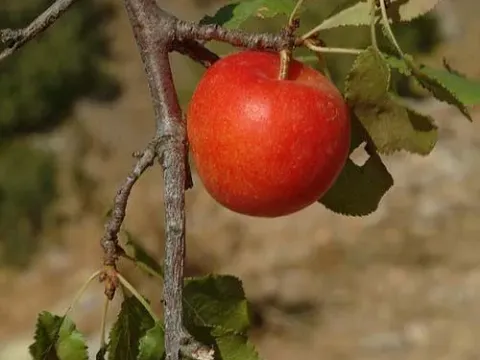
Bear plum
Prunus ursina
The bear plum (Prunus ursina) is a distinct species within the Rosaceae family. It is native to the mountainous terrains of the Levant and Middle Eastern regions, typically thriving in wild habitats ranging from Lebanon to Syria and Turkey.
What the section contains
Bear plum
This species is highly regarded for its adaptation to rugged, limestone-rich soils. Unlike many domestic plum varieties, Prunus ursina prefers well-drained, slightly alkaline substrates and demonstrates remarkable resilience to drought, making it an excellent candidate for harsh landscape conditions.
Biologically, the plant manifests as a shrub or small deciduous tree. Its morphology is characterized by dense foliage and early spring blooming, during which it produces small, white flowers that are pollinated by insects. The growth habit is typically slow, emphasizing its hardiness over rapid production.
The climatic requirements involve a Mediterranean-influenced temperate environment with distinct seasonal changes. It requires full sunlight to ensure adequate flower bud formation and optimal fruit ripening during the shorter growing seasons of its native range.
In agricultural practice, this plant is primarily utilized as a rootstock. Its robust root system imparts vigor and resistance to soil-borne stresses to grafted scions, enhancing the overall survival rate of stone fruit orchards in marginal environments.
Common fungal diseases such as shot-hole blight and Monilinia (brown rot) pose the most significant threats to the bear plum. These pathogens are particularly active during humid spring weather and can drastically reduce fruit yield.
Insect pests including aphids and plum curculio often target the tender shoots and young fruits. Effective management strategies involve integrated pest management (IPM) techniques to balance biological control and chemical intervention.
Root system health is vital; the plant is highly susceptible to Phytophthora root rot if exposed to waterlogged or poorly drained soil conditions. Maintaining proper soil moisture levels is the primary defense against these pathogens.
Wildlife and rodents can cause mechanical damage to the bark, especially during winter months. Protecting the trunk with guards is a standard, essential practice to prevent long-term structural weakness or fungal invasion.
Pruning is essential to reduce the risk of disease spread. Removing congested branches increases airflow within the canopy, which effectively minimizes the microclimatic conditions favorable for fungal growth.