
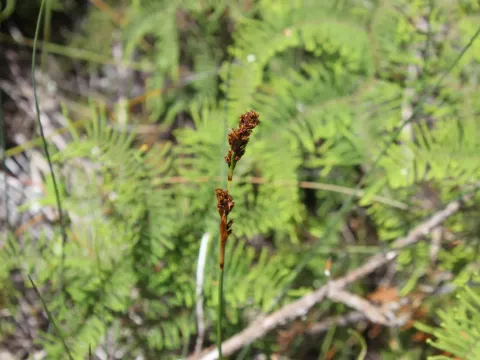
Baumea
Baumea
Baumea is a genus of perennial herbaceous plants belonging to the Cyperaceae family. These plants are characteristic of wetland ecosystems and are typically found growing in damp, marshy environments or along the fringes of freshwater bodies.
What the section contains
Baumea
The native range of Baumea primarily includes Australia, New Zealand, and various islands in the Pacific. Given its origin, the plant thrives in mild to warm climates and requires consistent humidity to maintain healthy growth cycles.
Regarding soil requirements, Baumea prefers acidic, nutrient-rich, and waterlogged substrates. It thrives best in peaty or sandy soils that can maintain a high moisture content throughout the year without becoming stagnant or anaerobic.
Botanically, the plant is known for its stiff, often flattened or cylindrical stems that form dense clumps or tussocks. Its root system is robust, allowing it to anchor effectively in loose, saturated sediments typical of its habitat.
In terms of agricultural and horticultural utility, Baumea is highly valued for phytoremediation and soil stabilization. It acts as a natural bio-filter and is widely used in landscape design to enhance the aesthetic and functional quality of water features.
The primary threats to Baumea in cultivation include fungal pathogens that thrive in cold, overly stagnant conditions. These infections often manifest as root rot, which can quickly compromise the entire clump if left untreated.
Various insect pests, including aphids and specialized mites, can infest the stems and floral structures. Their feeding activity can weaken the plant and lead to secondary infections, requiring careful monitoring of plant health.
Competition from invasive plant species is a major concern. Due to its specific habitat requirements, Baumea can be easily outcompeted by more aggressive wetland flora if the environmental conditions are not strictly managed.
Chemical imbalances, such as excessive runoff of agricultural fertilizers into the water, can cause nutrient toxicity or promote algal blooms that physically shade out the Baumea plants, hindering their photosynthetic activity.
Management of these threats involves proactive environmental monitoring and cultural practices, such as maintaining proper spacing and ensuring adequate water circulation to prevent the accumulation of pathogens.