
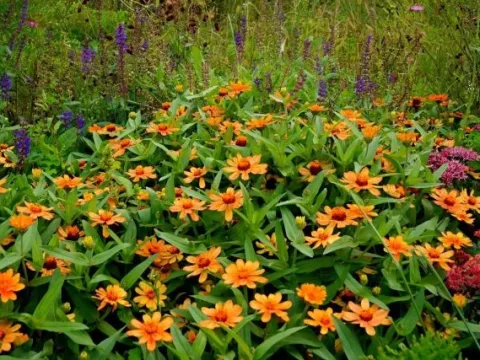
Zinnia hybrids
Zinnia hybrids
Zinnia hybrids (Zinnia hybrids) are popular ornamental plants belonging to the Asteraceae family. Originating from the warmer regions of Central America, they have become a staple in commercial flower production and landscape design worldwide.
What the section contains
Zinnia hybrids
Seeds are typically sown indoors 4–6 weeks before the last expected frost. They require a warm germination environment, ideally between 22°C and 25°C, to ensure high emergence rates.
Transplanting into the field is carried out only after soil temperatures have risen significantly. These plants are extremely frost-sensitive, and exposure to temperatures near freezing can cause irreversible damage to the seedlings.
Botanically, they are characterized by their sturdy, branching stems and diverse flower heads, which can range from single daisy-like shapes to complex double-flowered forms created through selective hybridization.
In terms of agricultural use, these hybrids are favored for their excellent vase life, making them a primary crop for the commercial cut flower industry and professional park landscaping.
Full sun exposure is a non-negotiable requirement for Zinnia hybrids. They require at least 6 to 8 hours of direct sunlight daily to maintain compact growth and produce the vibrant colors expected of high-quality blooms.
The ideal soil is well-drained, fertile, and slightly loamy. While they are adaptable, poor drainage often leads to root rot, which is the most common cause of failure in poorly managed fields.
Watering management is critical; drip irrigation is preferred over overhead systems. Keeping the foliage dry helps significantly in preventing various leaf-spotting fungi that thrive in humid environments.
Nutrient management involves a balanced application of fertilizers during the vegetative stage, transitioning to higher phosphorus and potassium inputs as the flowering cycle begins to maximize bloom quality.
Maintaining proper plant density is essential for airflow. Crowding plants creates a microclimate that encourages disease, so spacing should be strictly followed based on the specific cultivar's mature size.
Powdery mildew is the most pervasive threat to Zinnia hybrids. It manifests as a white, dusty fungal growth that rapidly covers the foliage, reducing the plant's vigor and commercial marketability.
Botrytis blight (gray mold) can infect flowers, especially in high-humidity conditions or after rainfall. Removal of affected tissues and improving ventilation are essential management practices.
Pests such as aphids, spider mites, and Japanese beetles frequently target Zinnias. These pests can transmit viruses or cause direct damage by feeding on sap and foliage, requiring proactive monitoring.
Integrated Pest Management (IPM) protocols are highly recommended, focusing on early detection and the use of targeted insecticides or biological controls to protect the crop without disrupting beneficial insects.
- Implement a 3-year crop rotation schedule.
- Monitor for insect populations weekly.
- Destroy heavily infected plant material immediately.