
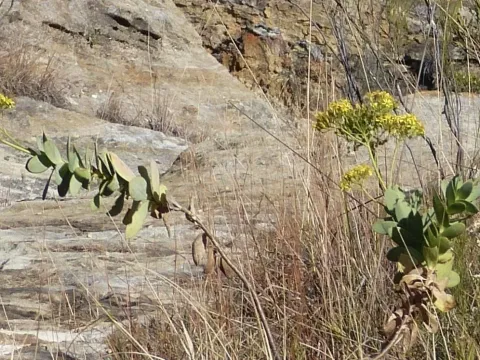
Vertical Leaf Senecio
Senecio crassissimus
The Vertical Leaf Senecio (Senecio crassissimus) is a distinctive succulent shrub belonging to the Asteraceae family. Originating from Madagascar, this plant is well-adapted to rocky, arid environments where moisture availability is inconsistent.
What the section contains
Vertical Leaf Senecio
The plant requires plenty of bright, direct sunlight to maintain its signature upright leaf orientation and silver-blue foliage coloration. Inadequate lighting will cause the succulent to become etiolated and lose its structural integrity.
Temperature management is straightforward, as the plant thrives in standard indoor temperatures between 18°C and 25°C. During the cooler winter months, it is essential to keep the plant in a slightly cooler environment to trigger its natural dormancy.
Soil composition must prioritize drainage above all else. A porous mix consisting of potting soil, coarse grit, and perlite ensures that the root system does not remain submerged in standing water, which is a common cause of death.
In terms of usage, this species serves primarily as an ornamental plant. Its unique architectural appearance makes it a popular choice for succulent enthusiasts, xeriscaping projects, and modern indoor green design.
The primary health risk for this plant is the development of root rot due to overwatering. Once rot takes hold, it can spread to the stem, often causing the plant to collapse very quickly if not treated immediately.
Mealybugs are the most common pest observed on this species. These small, cottony insects prefer to cluster in the leaf axils, where they feed on plant sap and secrete honeydew, which can attract secondary fungal infections.
Effective pest management involves early detection and the use of insecticidal soap or neem oil treatments. Always test the treatment on a small section of the plant to ensure it does not damage the delicate cuticle.
Environmental stress, such as sudden shifts in humidity or drafts, can make the succulent more susceptible to disease. Maintaining consistent conditions helps the plant develop a strong natural defense mechanism.
Providing optimal airflow around the plant is crucial for preventing fungal issues. Ensuring that the top layer of soil dries out completely between waterings is the best practice for maintaining long-term plant health.