
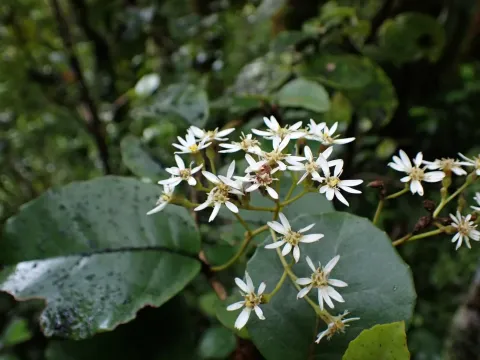
Tree daisy
Olearia arborescens
The tree daisy (Olearia arborescens) is an evergreen shrub belonging to the Asteraceae family. Native to New Zealand, this species thrives in forest margins and mountainous scrublands, adapted to oceanic and mild temperate climates.
What the section contains
Tree daisy
To successfully cultivate this plant, provide well-draining, nutrient-rich soil. It is particularly sensitive to waterlogged conditions, which can quickly lead to root rot; therefore, planting in elevated beds or sandy loams is recommended.
The species prefers a position with filtered sunlight or partial shade. While it can tolerate coastal environments, it requires protection from severe, drying winds that may damage its characteristic leathery, serrated foliage.
Watering should be consistent throughout the growing season, especially for younger plants. Once established, the tree daisy demonstrates moderate drought tolerance but performs best when soil moisture remains stable without becoming saturated.
Maintenance involves light pruning after the flowering period to encourage density and shape. By removing older woody stems, gardeners can rejuvenate the shrub and improve its overall structural integrity, ensuring a more vibrant display of its daisy-like white flowers.
Common issues include fungal pathogens such as leaf spot and powdery mildew. These are often triggered by high humidity levels and poor air circulation within the shrub canopy, necessitating careful spacing during the planting process.
Pest pressures primarily include scale insects and spider mites, which can sap the plant's vitality. Regular monitoring and the application of horticultural oils or suitable systemic insecticides are effective strategies to mitigate infestations before they spread.