
Tithonia diversifolia
Tithonia diversifolia
Description
Sowing dates
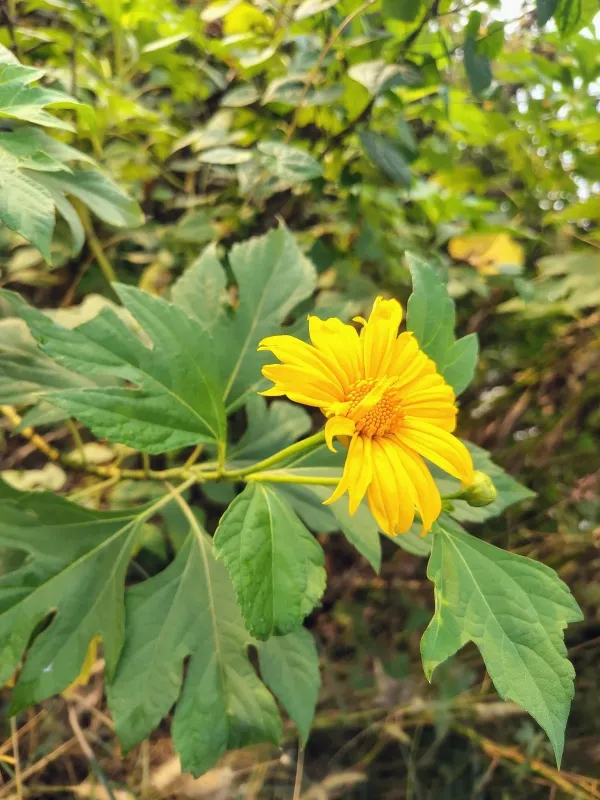
Tithonia diversifolia, commonly known as the Mexican sunflower, is a fast-growing shrub in the Asteraceae family often cultivated for biomass production.
Propagation is typically done using stem cuttings, which are planted directly into the soil during the wet season to ensure rapid root establishment.
For seed propagation, seeds are sown in nursery beds before being transplanted into the field at a spacing that allows for maximum canopy development.
Spacing of 50 cm to 1 meter is recommended for hedge rows or biomass plots, ensuring the plants have enough room to produce significant leaf volume.
Preparation involves clearing the area of aggressive perennial weeds to prevent competition, allowing the young plants to gain a competitive advantage.
Growing requirements
This species thrives in a wide range of soil types but performs best in fertile, well-drained loams where moisture availability is consistent throughout the year.
Tithonia is a sun-loving plant that requires full exposure to sunlight; shade significantly reduces its growth rate and total biomass yield per hectare.
While it is relatively drought-tolerant once established, optimal productivity is achieved in regions with high rainfall and tropical or subtropical temperatures.
The plant demonstrates good tolerance to moderate soil acidity, making it an excellent candidate for improving nutrient cycling in degraded agricultural lands.
It is sensitive to frost and extreme cold, which effectively limits its commercial cultivation to frost-free zones across the globe.
Yield
Tithonia diversifolia is widely recognized for its superior nutrient content, particularly nitrogen, phosphorus, and potassium, making it a premier green manure.
Annual yields of biomass can exceed 40–50 tons per hectare, providing a sustainable and cost-effective alternative to expensive commercial synthetic fertilizers.
The plant regenerates rapidly after cutting, allowing for multiple harvests per year, which maintains a constant supply of organic matter for the farm.
In addition to soil enrichment, the biomass acts as an effective mulch, suppressing weed growth and retaining soil moisture for cash crops.
Research indicates that integrating Tithonia biomass into cropping systems significantly boosts yields of staple crops like maize and various vegetables.
Main diseases and pests
Common pests include aphids and mites, which primarily affect young, tender leaves, especially during periods of water stress or lack of nutrients.
Powdery mildew and various leaf spot diseases may appear during periods of high humidity and poor air circulation between the dense plant stands.
Root rot is a potential risk in waterlogged conditions, highlighting the importance of selecting well-drained sites for establishing the crop.
Due to its prolific growth, Tithonia can behave as an invasive species in certain environments, requiring careful management to avoid spreading into non-target areas.
Integrated pest management, including regular monitoring and removal of infected plant parts, is essential for maintaining crop health and productivity.
Harvesting
Harvesting is performed by cutting the succulent green stems and leaves, ideally before the onset of flowering to maximize nutrient concentration.
The fresh biomass is often chopped into smaller pieces to accelerate decomposition when applied directly as a green manure or soil amendment.
When intended for livestock feed, the harvested material should be wilted or processed to mitigate potential bitterness and enhance animal palatability.
Seed collection involves identifying healthy flowering stems, allowing them to dry in the field, and then harvesting the seeds once the heads turn brown.
Using sharp tools for harvesting is crucial to avoid damaging the main stems, which promotes vigorous regrowth and increases the lifespan of the plantation.