
Camphor bush
Tarchonanthus camphoratus L.
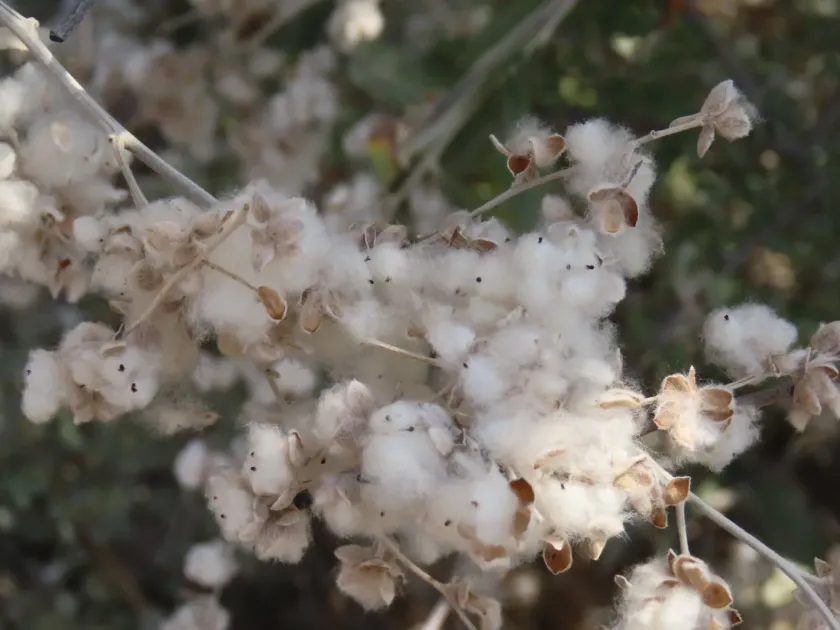
Description
Growing requirements
The camphor bush (Tarchonanthus camphoratus L.) belongs to the Asteraceae family. It is a perennial evergreen plant that, in its natural environment, grows as a large shrub or a small tree reaching heights of 5 to 9 meters.
The species is native to arid regions of Africa, including South Africa, East Africa, and the Arabian Peninsula. It is evolutionary adapted to savannah environments, rocky slopes, and riverbanks, showing remarkable resilience to prolonged periods of water scarcity.
For optimal development, the culture requires intense sunlight and well-drained, preferably sandy or loamy soils. The plant is extremely sensitive to waterlogging, as excessive moisture in the root zone can trigger rapid decay and root rot.
The ideal temperature range for growth is between 18 and 30 degrees Celsius. While the plant can tolerate slight frost, severe freezing temperatures can cause significant damage to the aerial parts of the bush, particularly the tender young shoots.
The plant is highly valued for its camphor-scented essential oils. Both the leaves and wood are utilized in traditional medicine, the perfume industry, and as a natural insect repellent through the process of burning or air-drying the foliage in living spaces.
Main diseases and pests
The main threats to the camphor bush are fungal infections, which develop primarily due to poor ventilation or improper irrigation management. Overwatering is the most common cause of root rot, which can prove fatal to the plant.
Pests such as leaf-eating insects and spider mites pose a significant risk, especially in greenhouse conditions or during periods of low humidity. Proper sanitation, including pruning affected branches, is essential to maintain plant health.
Powdery mildew can thrive in stagnant air, making the thinning of the canopy a mandatory horticultural practice. Ensuring adequate airflow helps to prevent the spread of fungal spores and maintains the integrity of the foliage.
Aphids frequently target the new growth, extracting sap and weakening the plant's overall vitality. Using mild soap solutions or biological control methods is recommended to manage infestations without compromising the quality of the essential oils.
Viral diseases, which manifest as leaf curling and yellowing, require immediate removal of infected specimens to prevent further spread. Maintaining strict hygiene in the cultivation area is vital for the long-term sustainability of the plantation.