
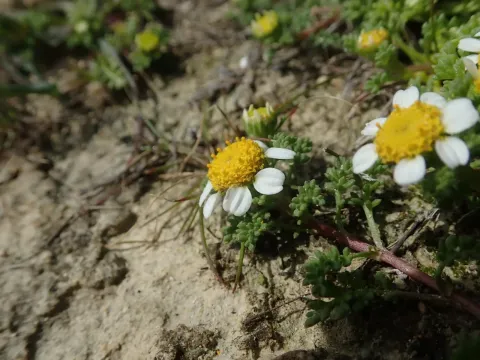
Anthemis secundiramea
Anthemis secundiramea
Anthemis secundiramea is a member of the Asteraceae family, well-known for its adaptability to arid Mediterranean environments and its botanical resemblance to other chamomile species.
What the section contains
Anthemis secundiramea
The plant is characterized by a distinct branched growth habit, reaching a medium height, and produces small, daisy-like flower heads that serve as the primary harvested material.
Soil requirements for this crop focus on excellent drainage; it thrives in sandy, rocky, or calcareous substrates where water logging is effectively prevented.
Climate preferences involve high levels of solar exposure and moderate temperatures during the growth cycle, as the plant is adapted to open, sunny landscapes.
Agricultural management is relatively simple due to the plant's inherent hardiness, allowing it to compete effectively in low-fertility soils without intensive fertilization programs.
Seeding takes place during early spring, ensuring the soil has reached the minimum temperature required for seed germination, typically above 8 degrees Celsius.
Due to the small size of the seeds, surface sowing or very shallow planting is recommended to ensure that the seedling energy is directed towards rapid surface emergence.
Row cropping systems are preferred for this species, maintaining spacing that allows for adequate airflow and weed control throughout the growing season.
Proper irrigation management during the establishment phase is essential, although once established, the plants demonstrate significant tolerance to water stress.
Farmers should focus on selecting weed-free fields for sowing, as the slow initial growth of the plant can be compromised by aggressive invasive weeds.
The primary threats to Anthemis secundiramea include soil-borne fungal pathogens that thrive in conditions of excessive soil moisture and poor drainage.
Root rot and damping-off represent significant risks during the early stages of plant development, especially if planting density is too high.
Insect pests, such as aphids, can occasionally infest the flower heads during the blooming stage, potentially reducing both the quality and the yield of the harvested material.
Integrated pest management strategies should be applied to prevent outbreaks, focusing on cultural practices such as crop rotation and balanced irrigation.
Monitoring for signs of powdery mildew is also necessary, as humid conditions can promote its spread across the foliage, affecting the overall plant health.
Harvesting is performed during the peak flowering period to capture the highest concentration of volatile compounds and secondary metabolites.
Mechanical harvesting is typically achieved using specialized equipment designed for medicinal herbs, ensuring that the flower heads and upper stems are collected efficiently.
Post-harvest handling is critical, requiring quick transport to a drying facility to prevent moisture-related degradation of the chemical profile.
Controlled drying processes, maintaining temperatures below 40-45 degrees Celsius, are used to preserve the essential oils and structural integrity of the plant tissues.
Final storage involves keeping the processed dry matter in dry, well-ventilated conditions, away from light and heat to maintain the stability of the active components.