
Stokesia laevis
Stokesia laevis (Hill) Greene
Description
Sowing dates
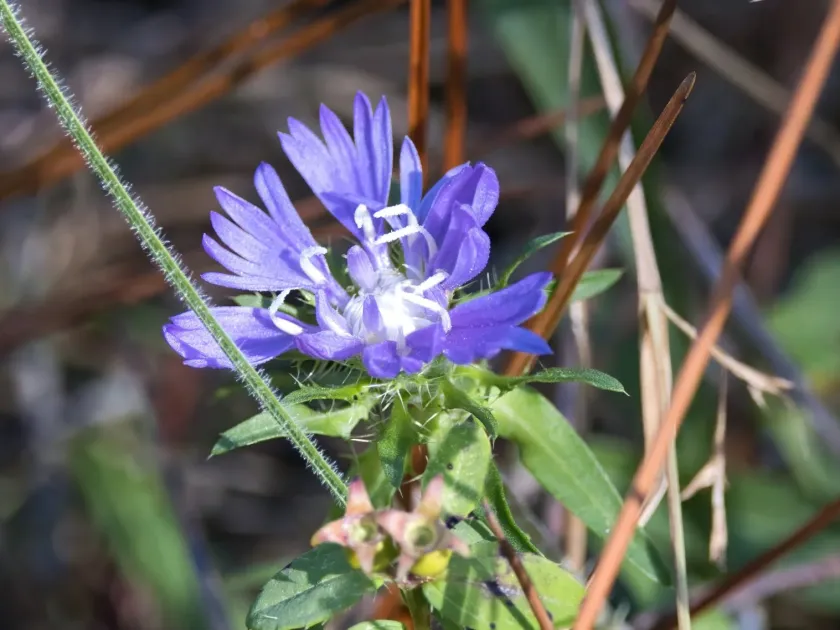
Stokesia laevis, commonly known as Stokes' aster, is a fascinating perennial herb belonging to the Asteraceae family, native to the southeastern United States.
Seeds can be sown in the fall to undergo natural stratification, which is essential for ensuring uniform germination in the following spring season.
For greenhouse cultivation, seeds are sown in late winter in well-draining seed trays, maintaining a temperature range of 15 to 20 degrees Celsius.
Once seedlings have developed at least two sets of true leaves, they should be hardened off before being transplanted into their permanent garden location.
Propagation through root division is also a viable method, typically performed in early spring or autumn to encourage robust root system establishment.
Growing requirements
Stokes' aster thrives in full sun, although it can tolerate partial shade in warmer climates, particularly during the peak afternoon sun hours.
The soil must be fertile, rich in organic matter, and, most importantly, possess excellent drainage properties to prevent winter rot.
It prefers slightly acidic to neutral soil pH levels and performs poorly in heavy clay soils that retain excessive moisture during the dormant season.
Regular watering is necessary during prolonged dry spells to support healthy foliage and maximize the production of its signature fringed flowers.
While hardy in many zones, applying a layer of organic mulch around the plant base in late fall helps regulate soil temperature during freezing weather.
Main diseases and pests
Root rot is the most significant threat to Stokesia laevis, often resulting from poor drainage or planting the crown too deeply in damp soil.
Slugs and snails can cause significant damage to young succulent foliage during the spring, necessitating the use of perimeter barriers or traps.
Aphids occasionally infest the flower buds, which can be managed by manual removal or the application of insecticidal soaps if the infestation is heavy.
Fungal infections such as powdery mildew can occur if air circulation around the foliage is restricted due to overcrowding or high humidity levels.
Ensuring the plant has adequate space and is not competing with invasive weeds is crucial for maintaining its overall vigor and resistance to pests.