
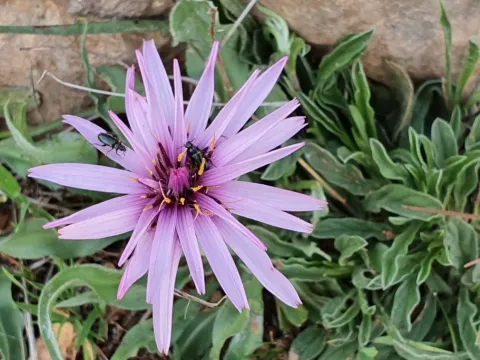
Scorzonera undulata
Scorzonera undulata
Scorzonera undulata is an herbaceous perennial belonging to the Asteraceae family. It is characterized by its adaptability to arid environments and distinctive leaf morphology, distinguishing it from related garden species.
What the section contains
Scorzonera undulata
The planting process begins with selecting well-draining, loose soil to allow for optimal root elongation. Seeds are typically sown in early spring as soon as the ground can be worked without compaction.
Sowing density is crucial, with seeds spaced approximately 10-15 centimeters apart within rows. This density prevents overcrowding while allowing for sufficient aeration between the developing leaf rosettes.
Germination is influenced by soil temperature; keeping the substrate consistently moist but not waterlogged is essential for successful emergence. Shallow planting depths of 2 centimeters promote faster sprout development.
As a perennial, the crop establishes its root system throughout the first year. Proper early-season management ensures a robust plant capable of surviving subsequent seasonal shifts.
The plant thrives in full sun exposure. Sunlight is the primary driver of sugar accumulation in the taproot, which is the main edible and nutritious portion of the plant.
Soil quality must be friable and deep, preferably a sandy loam. Heavy, clay-rich soils should be avoided or amended with organic matter to prevent stunted or distorted growth of the primary roots.
Moisture management is key; while the plant is drought-tolerant, supplemental watering during prolonged dry spells during the first half of the growth cycle yields significantly larger roots.
Scorzonera undulata is generally resistant to moderate cold, but extreme fluctuations in winter temperature can impact crown viability if the ground is not protected by mulch.
Nutrient requirements are modest. Over-fertilization, especially with nitrogen, should be avoided as it encourages excess foliage at the expense of root storage capacity.
Root rot is the most significant threat, particularly in poorly drained environments where moisture accumulates near the taproot, providing a perfect breeding ground for pathogenic fungi.
Pests such as aphids and leaf miners may colonize the foliage during the peak of the growing season. Maintaining clean rows and removing weed hosts is the most effective preventative measure.
Wireworms can cause localized damage to the roots, creating entry points for secondary infections. Crop rotation with non-host plants is essential for maintaining soil health over multiple years.
Slugs and snails can decimate young leaf tissue in the spring. Barrier techniques, such as crushed eggshells or physical barriers around the patch, are often sufficient for smaller agricultural sites.
Monitoring for signs of powdery mildew is necessary in humid climates, as poor air circulation within dense plant patches can lead to rapid fungal spread across the foliage.