
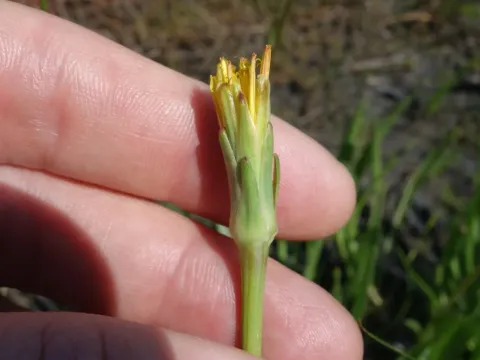
Scorzonera parviflora
Scorzonera parviflora
Scorzonera parviflora is a perennial herbaceous plant belonging to the Asteraceae family, well-adapted to saline and arid environments.
What the section contains
Scorzonera parviflora
Sowing should be scheduled in early spring as soon as soil temperatures reach 6-10 degrees Celsius to ensure steady germination across the field.
Before sowing, seeds benefit from cold stratification or soaking to improve emergence rates, especially when soil moisture is limited in the early spring.
Recommended row spacing is between 30 and 45 cm, which facilitates mechanical weeding and allows the plant enough space to develop its rosette leaves.
Autumn sowing is also a viable option in milder climates, enabling the crop to establish a deep root system before the onset of the summer heat.
This species is highly recognized for its halophytic nature, thriving in saline soils where many other forage crops would fail to grow or develop.
It demands high levels of direct sunlight and should be planted in open areas, as any shading significantly reduces biomass accumulation and plant vigor.
The crop prefers well-drained loamy or sandy soils, although it exhibits remarkable flexibility across various soil textures due to its deep taproot.
Scorzonera parviflora is exceptionally drought-tolerant, making it an excellent candidate for agricultural production in semi-arid and steppe regions.
Soil pH preference ranges from neutral to slightly alkaline, reflecting the natural ecology of this resilient plant species found in dry, open habitats.
The yield potential of Scorzonera parviflora is strongly influenced by local environmental conditions and the intensity of soil management practices employed.
With proper fertilization and weed control, the crop can provide multiple harvests, yielding up to 20 tonnes of green biomass per hectare per season.
The nutritional profile of the leaves makes it a valuable feed component, rich in minerals and secondary metabolites beneficial for livestock health.
Biomass production increases significantly with nitrogen-based fertilization, provided that adequate soil moisture levels are maintained throughout the growing cycle.
Careful management of the harvest schedule is necessary to balance the total quantity of forage with the quality of the raw material obtained.
Aphid infestations are the most common challenge, particularly during hot, dry spells, which can lead to stunted growth and damage to young, tender leaves.
Flea beetles may pose a threat during the seedling stage, requiring close monitoring and timely intervention to prevent excessive foliage damage.
Root rot diseases are usually associated with poor soil drainage and waterlogging, highlighting the importance of proper land preparation and aeration.
Powdery mildew can affect the plants under conditions of high humidity and poor airflow, necessitating regular inspections to mitigate its spread.
Adhering to a robust crop rotation strategy is the most effective biological method to minimize the pressure from soil-borne pathogens and pests.
Harvesting for forage should occur during the early flowering stage, as this is when the plant reaches its peak nutritional value and succulence.
Cutting the plant at a height of approximately 5-7 centimeters promotes vigorous regrowth, allowing for multiple harvests within a single growing season.
Effective drying processes are essential if the material is harvested for hay, preventing nutrient loss and ensuring the preservation of the final product.
For seed production, harvesting should be performed as soon as the flower heads begin to turn brown, typically using a two-stage method to prevent shattering.
Proper post-harvest seed treatment, including thorough cleaning and moisture control, is vital to maintaining long-term seed viability for future use.