
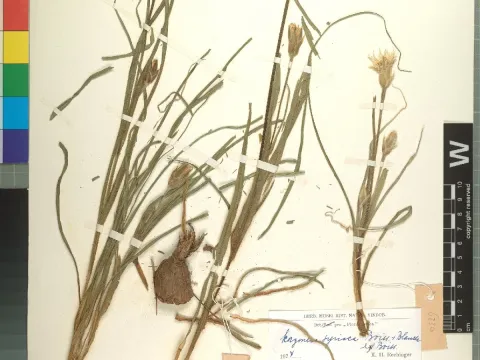
Scorzonera syriaca
Scorzonera syriaca
Scorzonera syriaca is a herbaceous perennial belonging to the Asteraceae family. It is a distinct plant known for its edible taproots, which have gained interest among home gardeners and sustainable agriculture enthusiasts.
What the section contains
Scorzonera syriaca
Sowing should take place in early spring as soon as the soil is workable, typically when temperatures reach 5 to 8 degrees Celsius. The seeds require adequate soil moisture to ensure even germination and healthy early development.
Winter sowing is also a viable option in milder climates, allowing for an earlier harvest in the following season. Seeds should be sown at a depth of 2–3 centimeters to protect them from environmental fluctuations.
Maintaining proper spacing is essential for root quality. Rows should be spaced 30 to 40 centimeters apart, with individual plants thinned to about 15 centimeters to allow the roots to swell without competing for space.
Crop rotation is vital for the health of the Scorzonera patch. Avoid planting it in areas previously occupied by other Asteraceae species to prevent the buildup of soil-borne pathogens and nutrient depletion.
Scorzonera syriaca thrives in deep, loose, and well-draining sandy or loamy soils. Rocky or compacted soils must be avoided, as they cause the taproots to branch and deform, significantly reducing market value.
The plant requires full sun for optimal root development. While it is hardy and can tolerate some shade, limited sunlight often results in excessive foliage growth at the expense of the root's nutrient storage.
Consistent moisture is necessary throughout the growing season, particularly when the taproot begins to thicken. Prolonged drought stress often leads to premature bolting, which renders the root woody and unpalatable.
Soil pH should ideally be neutral or slightly alkaline. Acidic conditions hinder root growth and increase susceptibility to nutrient deficiencies. Correcting pH levels with lime before planting is a recommended practice.
Avoid using fresh manure, as it encourages root branching. Instead, incorporate well-rotted compost or balanced potassium-rich fertilizers to support healthy root formation and disease resistance.
The primary pests affecting young Scorzonera plants include flea beetles and subterranean insects like wireworms. Implementing physical barriers and maintaining clean cultivation can help minimize pest populations.
Fungal diseases, such as powdery mildew, may occur during hot and humid spells. Ensuring proper spacing and airflow between plants is the best preventative strategy against these common issues.
Slugs and snails are major threats to the tender leaves during damp weather conditions. Applying mulch made from abrasive materials, such as crushed stone or grit, can help deter these mollusks effectively.
Root rot is often a result of waterlogged soil. Proper drainage is crucial; if the garden site is prone to flooding, raised beds are an excellent solution to manage water levels and ensure root health.
Regular monitoring and the use of balanced mineral nutrition help the plant withstand environmental stresses. Promoting biodiversity in the garden also attracts natural predators that keep pest numbers in check.
Harvesting usually occurs in late autumn, roughly 120 to 150 days after germination. The roots are remarkably hardy and can be left in the ground until the first hard frost, which improves their flavor profile.
Great care must be taken when lifting the roots, as they are brittle and prone to snapping. A garden fork is the preferred tool to lift the entire root system without damaging the taproot structure.
Once harvested, the roots should be cleaned, dried briefly in the shade, and trimmed of foliage. Avoid washing them until you are ready to consume them to prolong their storage life after harvest.
For long-term storage, the roots can be kept in boxes filled with damp sand in a cool, dark cellar. Maintaining low temperatures close to freezing ensures that the roots stay crisp and nutritious through winter.
Scorzonera syriaca is highly valued for its culinary versatility and health benefits, specifically its high inulin content. It serves as an excellent ingredient in stews, soups, or as a nutritious roasted side dish.