
Picnomon acarna
Picnomon acarna (L.) Cass.
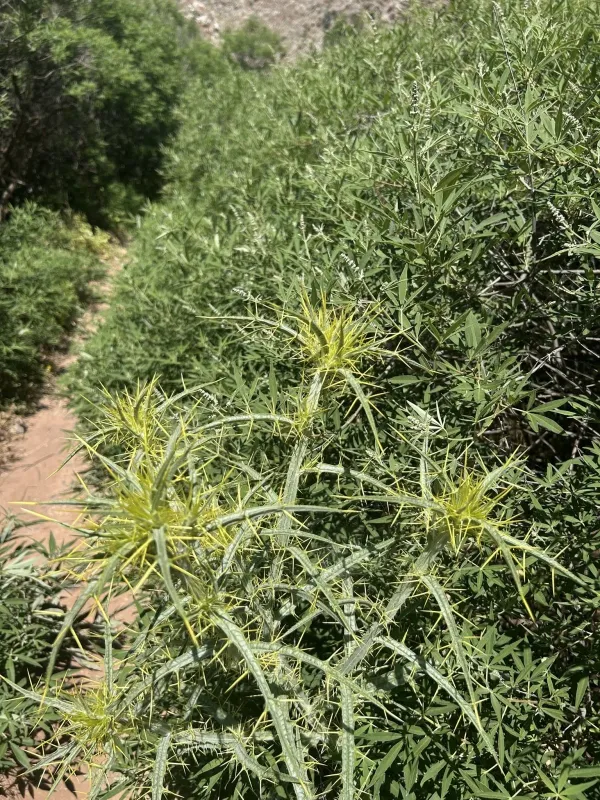
Description
Sowing dates
Picnomon acarna is a thermophilic plant, so sowing in temperate climates should be carried out in the spring when the soil warms up to 10-12 degrees Celsius.
In its natural habitat, the plant often propagates by self-seeding, which ensures a high density of the population in abandoned or poorly managed areas.
When cultivating, seeds are sown in rows with spacing of about 45-60 centimeters to ensure the full development of the root system and the aerial part.
The sowing depth is usually 1-2 centimeters, depending on the soil structure and moisture availability at the time of sowing operations.
To accelerate seed germination and obtain uniform emergence, the soil must be carefully prepared, weed-free, and moderately moistened.
Growing requirements
Picnomon acarna is a member of the Asteraceae family that prefers sunny and warm areas with minimal shading during the growing season.
The plant exhibits high resistance to drought conditions, allowing it to successfully develop on poor, stony soils typical of the Mediterranean region.
The optimal soils for growth are light sandy or loamy soils with good drainage and a neutral to slightly alkaline reaction.
The crop is extremely sensitive to excessive waterlogging, which can cause root rot and the death of young shoots during the spring period.
In terms of agricultural management, Picnomon does not require intensive fertilization, but regular inter-row cultivation promotes better oxygen access to the roots.
Yield
The agricultural yield of Picnomon acarna as a specialized crop is limited, as the plant is more often considered a wild-harvested resource.
In the case of industrial harvesting for medicinal or florist purposes, the yield of aerial mass depends on moisture availability during the active growth phase.
Average productivity per hectare with proper care can vary, although exact indicators depend heavily on the specific regional climatic conditions.
Seed harvesting is carried out as they ripen in the flower heads, requiring timeliness because they are easily dispersed by wind or mechanical impact.
The economic viability of cultivation is determined by the intended end-use, including the collection of flower heads and seeds for further processing.
Main diseases and pests
The main threats to Picnomon are fungal diseases that develop under high humidity conditions during the summer season.
Among pests, aphids and specific weevils may be observed in plantations, damaging the receptacle and reducing the overall quality of the plant material.
To control weeds in Picnomon fields, only mechanical methods of weeding are used, avoiding the application of aggressive chemical herbicides.
Powdery mildew infection is typical for dense stands, so it is important to maintain optimal distance between individual plant specimens.
Monitoring of the crop state should be carried out weekly, especially during the flowering phase when the plant is most vulnerable to insect phytophages.
Harvesting
Harvesting the aerial parts of the plant for technical or medicinal purposes is performed during full flowering when the concentration of active substances is maximal.
When harvesting, it is important to consider the presence of sharp spines, so work must be performed using protective equipment and specialized gardening tools.
The mowed biomass must be immediately dried under a shed in a well-ventilated area to prevent decay and loss of commercial quality.
To obtain seeds, flower heads are cut manually or mechanically, followed by threshing and cleaning to remove impurities.
Storage of the dried raw material is carried out in dry, dark warehouses in paper or cloth packaging to prevent mold development and pest infestation.