
Guayule
Parthenium argentatum A. Gray
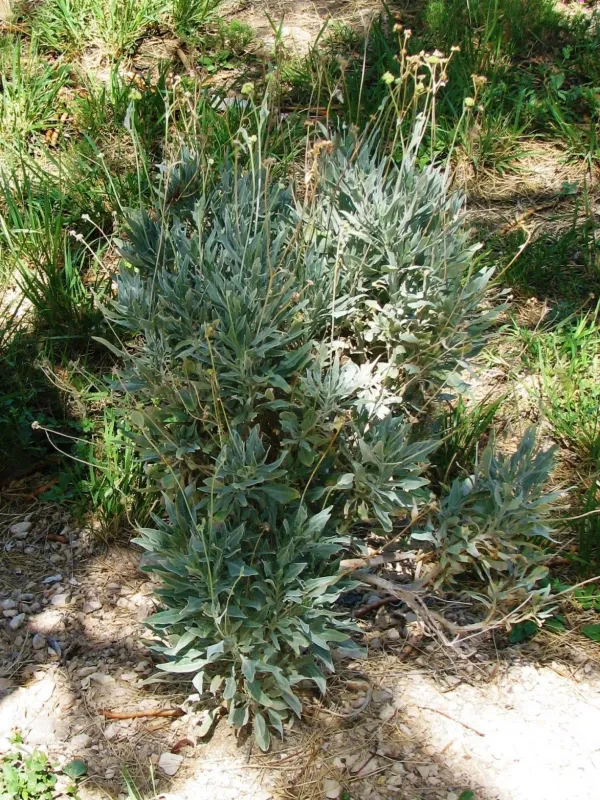
Description
Sowing dates
Guayule is a perennial shrub that is primarily propagated using nursery-grown seedlings that are subsequently transplanted into open fields. The seeds of this crop are known for low germination vigor, which often necessitates stratification or pre-treatment with growth regulators to ensure uniform emergence.
The optimal time for establishing plantations is the spring period, once the danger of night frosts has passed and the soil temperature has risen enough to support active root development. Seed sowing in trays is typically performed 8 to 12 weeks before the planned field transplanting date.
Direct seeding into the field requires specific conditions: soil temperatures must remain above 20–25 degrees Celsius, and consistent moisture must be maintained during the first few weeks of seedling establishment. Due to slow early growth, the crop requires rigorous weed management during its first two years.
Planting density varies depending on the intended use of the plantation and the specific mechanization technology employed for harvest. Standard configurations involve row spacing of 60 to 90 centimeters, which ensures proper ventilation and sufficient light interception for biomass accumulation.
In industrial-scale operations, drip irrigation is commonly practiced during transplanting to significantly improve seedling survival rates in arid environments. Agronomists recommend performing transplanting during overcast weather or evening hours to minimize transpiration stress on young plants.
Growing requirements
Guayule belongs to the Asteraceae family and is a semi-shrub with distinctive silvery-gray leaves, naturally adapted to the harsh conditions of semi-arid ecosystems. Its primary natural range includes the dry regions of Northern Mexico and the Southwestern United States.
The crop is highly dependent on intense solar radiation, as this environment drives the synthesis of polyisoprene (natural rubber) within the stem and root tissues. While the plant is drought-tolerant, supplemental irrigation is necessary to achieve industrial-scale biomass production.
Well-drained sandy or sandy-loam soils with a neutral or slightly alkaline pH are preferred. Waterlogging in the root zone is detrimental to the crop and often leads to the development of fungal pathogens affecting the root system.
Temperature regimes are critical: moderate winter cooling cycles help stimulate the metabolic accumulation of rubber, while extreme frost events can damage the above-ground biomass. Ideal climates are characterized by hot summers and dry, cool winters.
Essential agronomic management includes monitoring soil salinity. Despite its high ecological plasticity, guayule exhibits a sharp decrease in productivity and growth rates when subjected to high levels of soil salinity.
Yield
The yield of guayule is measured by the quantity of dry rubber produced per unit area, which depends directly on the age of the shrubs and the quality of agronomic inputs. Industrial plantations usually reach harvestable condition within 3 to 5 years after planting.
Average rubber accumulation in the biomass typically ranges from 5% to 12% of the dry stem weight, depending on the specific variety. Intensive cultivation can yield between 1 and 2 tons of rubber per hectare of plantation.
Regular pruning of the shrubs is a critical factor in maximizing yield, as it stimulates the formation of new vegetative growth, which is rich in rubber-producing cells. However, maintaining plants beyond 7 years of age typically does not result in significant additional rubber gains.
The use of modern hybrids allows for earlier polymer accumulation, making the crop an economically attractive alternative to the tropical rubber tree (Hevea). Research confirms that moderate stress factors, such as controlled water deficit, can enhance rubber concentration within the plant tissues.
Economic efficiency is closely linked to the complete processing of biomass, which includes extracting secondary products such as resins, waxes, and fiber residues that can be repurposed for construction materials.
Main diseases and pests
The primary threat to guayule plantations is root rot, caused by pathogenic fungi such as Phytophthora and Pythium, especially in scenarios involving poor soil aeration and excessive irrigation practices.
Young stands are susceptible to powdery mildew, which weakens the plant and decreases its overall photosynthetic capacity. Preventive fungicide applications are commonly used to mitigate the risk of infection in sensitive development stages.
Pests, including weevils and various aphid species, can cause localized damage by feeding on leaves and developing shoots. Regular scouting of the fields allows for the management of insect populations before they reach economic damage thresholds.
Nematodes represent a significant challenge for plantations established on sandy soils, where they attack the root system, preventing the efficient uptake of water and essential nutrients from deep soil profiles.
Non-infectious threats include potential winter kill during extreme temperature dips and wind erosion of the topsoil, which can expose the root crown, causing mechanical damage and increased susceptibility to environmental stressors.
Harvesting
Harvesting guayule is carried out through mechanized systems, utilizing specialized harvesters that cut the shrubs at the base or uproot the entire plant, including the root system, to ensure maximum yield.
Since rubber is stored within both the stems and roots, extracting the full biomass is critical to ensure the economic viability of the operation. Harvesting is generally scheduled during periods when the rubber concentration in the tissues has peaked.
The harvested biomass undergoes a shredding process, either in the field or at a processing facility, followed by chemical extraction with organic solvents or water-based mechanical processing to separate the rubber from the woody fibers.
Effective harvest logistics are essential to minimize raw material losses and prevent the enzymatic degradation of polymers that can occur if moist biomass is stored for extended periods in open-air conditions.
Modern harvesting techniques involve high-capacity windrowers that create uniform material flow for subsequent industrial processing, ensuring consistent quality of the final rubber product.