
Parthenium hysterophorus
Parthenium hysterophorus L.
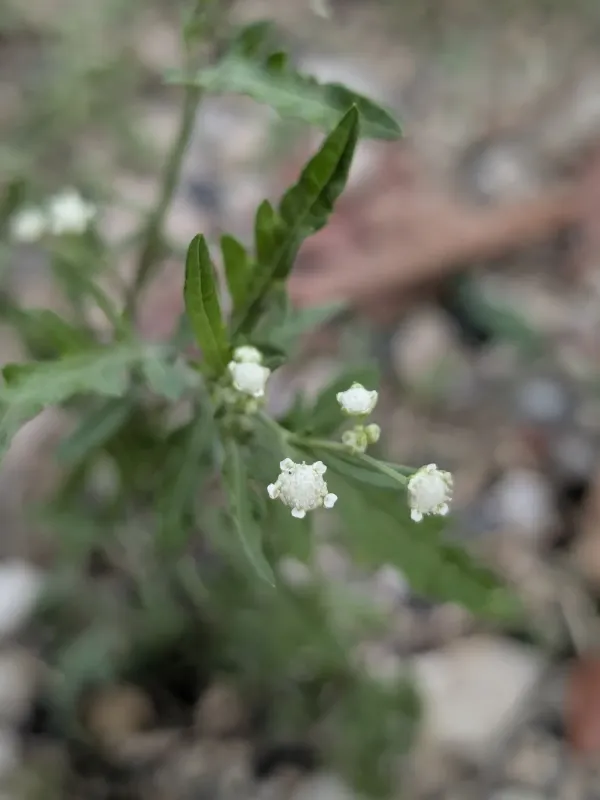
Description
Growing requirements
Parthenium hysterophorus is a member of the Asteraceae family, widely recognized as one of the most problematic invasive weeds worldwide. Originally native to tropical parts of the Americas, it has successfully colonized vast regions across Africa, Asia, and Australia.
The plant demonstrates remarkable environmental flexibility, capable of thriving in diverse soil types, including degraded, compacted, or nutrient-poor soils. It is particularly aggressive in areas with open space, such as roadsides, grazing land, and disturbed agricultural plots.
Climate requirements for this species are broad, as it prefers warm temperatures and thrives in both humid and semi-arid conditions. Its ability to tolerate drought allows it to persist in environments where many other plants fail to survive during the dry season.
Botanical traits include a deep taproot system, highly dissected leaves, and a prolific ability to produce seeds throughout the entire growing season. The plant's architecture allows it to shade out smaller crops, effectively suppressing their growth and reducing overall farm productivity.
In terms of land use, Parthenium hysterophorus has no positive role in agriculture; it is considered a major health hazard due to allergic reactions it causes in humans and its toxic effects on livestock. It creates severe economic losses by competing with crops for water, space, and sunlight.
Main diseases and pests
The primary threat posed by Parthenium hysterophorus is its rapid colonization capability. Because it faces few natural predators in its invasive range, it can quickly become the dominant plant species in any given area, creating monocultures that stifle local biodiversity.
Common issues include its potent allelopathic potential, meaning the plant releases chemicals into the soil that inhibit the germination of seeds from other crops. This makes crop rotation and soil preparation significantly more difficult and expensive for farmers.
Control is challenging due to the plant's high seed output, which can reach tens of thousands of seeds per individual. These seeds are easily dispersed via farm machinery, vehicle movement, wind, and surface water runoff during rainy weather.
Biological control agents, such as specialized rust fungi or leaf-feeding beetles, have been introduced in some countries, but their success remains limited and highly dependent on environmental and regional factors.
Integrated weed management remains the most effective approach. This includes a combination of mechanical removal before flowering, chemical interventions using broad-spectrum herbicides, and strict monitoring of harvested grain to prevent accidental further distribution.