
Desert Star
Monoptilon bellioides
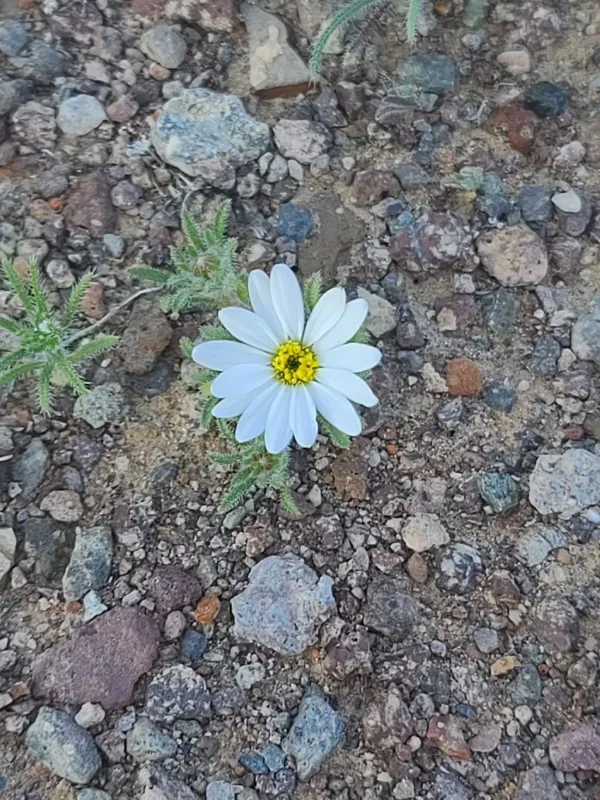
Description
Sowing dates
Monoptilon bellioides, commonly known as Desert Star, is an ephemeral plant whose life cycle is intricately linked to the availability of moisture in arid regions. In its natural habitat, seeds germinate immediately following winter or early spring rains when soil temperatures rise.
For cultivation, seeds should be sown in early spring after the risk of hard frost has passed. The seeds are very small and require light for germination, so they should be sown on the surface of the soil with minimal to no covering.
The substrate must mimic the desert environment: it should be sandy, extremely well-draining, and low in organic matter. Using a cactus or succulent potting mix often yields the best results for germinating these seeds.
Watering must be very carefully managed during the germination phase. The soil should be kept lightly moist until seedlings appear, then the frequency of watering must be drastically reduced to mimic the natural drying out of the desert soil.
The ideal temperature for germination ranges between 15 and 22 degrees Celsius. Extreme heat during the early stage combined with wet soil is detrimental and often leads to damping-off diseases.
Growing requirements
As a member of the Asteraceae family, Monoptilon bellioides requires full sun exposure to thrive. Any shading will lead to etiolated, weak growth, significantly reducing the plant's flowering capacity and overall vitality.
The soil must have excellent aeration and drainage. Heavy, clay-based soils are unsuitable as they retain moisture, which quickly causes root rot in this desert-adapted species. Alkaline to neutral soil pH is preferred.
This species is perfectly adapted to the dry, low-humidity air of desert climates. Increased humidity can be harmful to the plant's physiological processes, making it a challenging plant to grow in temperate or humid regions.
The root system of the Desert Star is designed to utilize sparse, infrequent rainfall. Its competitive ability is low; thus, it must be kept free from weeds, as it cannot compete with more aggressive plant species for nutrients and water.
Fertilization should be avoided or kept to an absolute minimum. Excess nutrients lead to lush but weak vegetative growth, which diminishes the plant's natural resilience and beauty while increasing susceptibility to pathogens.
Yield
In a horticultural context, yield refers to the success of flowering and the production of viable seeds. Under optimal conditions, the plant produces an abundance of small, daisy-like flowers that can cover the desert floor in a beautiful display.
The abundance of bloom is directly proportional to the plant's health during the initial growth phase. A well-established stand will produce a high density of flowers, contributing to the visual appeal of xeriscape or desert-style gardens.
Seed harvesting is the primary goal for those looking to propagate the species. Once the flowers fade and the stems begin to wither, seeds should be collected promptly to prevent loss to wind dispersal or wildlife.
The commercial potential is mainly restricted to the ornamental native plant industry. There are currently no widespread agricultural or industrial uses for Monoptilon bellioides, though it remains a subject of interest for native plant enthusiasts.
Maintaining yield requires minimal interference. The plant is self-regulating, and attempts to boost growth via excessive water or nutrients typically result in shorter lifespan and reduced reproductive success.
Main diseases and pests
The most significant threat to Monoptilon bellioides is root rot caused by improper drainage and overwatering. Once signs of rot appear, the plant usually declines rapidly and cannot be recovered.
Powdery mildew can become an issue if the plants are grown in confined spaces with poor air circulation. Ensuring a steady, gentle breeze is essential to prevent fungal outbreaks on the foliage.
Pests such as spider mites can infest the plants during periods of extreme heat and dryness. Integrated Pest Management (IPM) using soft soaps or natural predators is recommended to avoid harming the fragile structure of the plant.
Weed competition is a constant threat. In a natural desert setting, bare soil prevents competition, but in a garden setting, regular manual removal of competing weeds is vital for the survival of the Desert Star.
Chemical pesticides pose a high risk of phytotoxicity. Because this species is highly specialized for nutrient-poor, clean environments, it lacks the tolerance to handle strong synthetic chemical treatments, which often cause more harm than the pests themselves.