
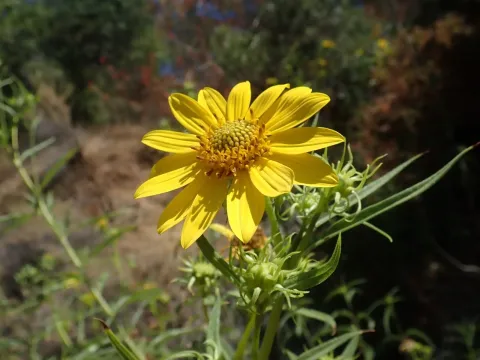
California sunflower
Helianthus californicus
The California sunflower (Helianthus californicus) is a perennial herbaceous plant belonging to the Asteraceae family. It is native to the western regions of North America, specifically California, where it typically thrives in moist environments such as meadows and stream banks.
What the section contains
California sunflower
This species requires full sun exposure to flourish and produce its characteristic golden flowers. While it can tolerate partial shade, optimal growth and stem strength are achieved only in open areas with consistent sunlight throughout the day.
Regarding soil requirements, it prefers fertile, moist, and well-draining soil. It is well-adapted to alluvial soils found near water sources but can adjust to garden soil provided that irrigation is managed effectively during the hotter months of the year.
Agrotechnical practices include maintaining adequate moisture levels and performing annual pruning of dead stems at the end of the season. The plant propagates primarily through rhizomes, which allows it to form dense colonies over several years of growth.
In terms of usage, this plant is primarily valued as an ornamental species. It serves as an excellent candidate for native plant gardens, wildlife-friendly landscapes, and naturalistic border plantings, providing nectar for bees and butterflies.
Common health issues include powdery mildew, which typically appears during periods of high humidity and poor airflow. Managing plant density and providing adequate space for air circulation is the most effective preventative measure.
Pest threats generally involve aphids and certain beetle species that feed on the foliage. While these rarely cause fatal damage to a healthy, established plant, manual removal or organic soap sprays can be used if infestation levels become significant.