
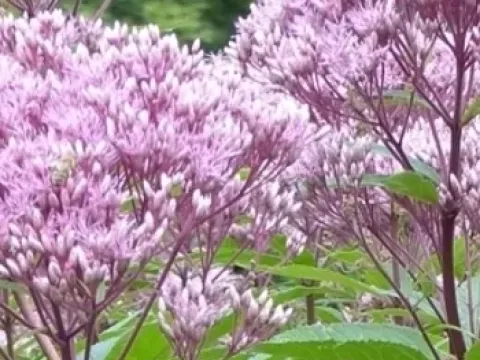
Eupatorium triste
Eupatorium triste
Eupatorium triste, commonly referred to as a member of the Joe Pye weed group, is a perennial herbaceous plant belonging to the Asteraceae family. It is recognized for its robust growth habit and distinct dark-colored stems that contribute to its ornamental and ecological value.
What the section contains
Eupatorium triste
The plant originates from North America, where it thrives in moist meadows, stream banks, and damp woodland edges. Understanding its natural habitat is essential for agronomic success, as it dictates the species' preference for consistent soil moisture and organic-rich environments.
Botanically, Eupatorium triste is characterized by its stiff, vertical stems which often exhibit deep purple or near-black pigmentation. Its leaves are lanceolate, arranged in whorls or opposite patterns, providing a lush, dense foliage structure throughout the growing season.
Agricultural success depends on providing fertile, moisture-retentive soils. The plant is notably tolerant of wet soil conditions, making it an excellent choice for poorly drained areas where other traditional crops might struggle with root asphyxiation or decay.
In terms of climate, it is well-adapted to temperate regions. It performs best in full sun, which helps intensify the dark pigmentation of the stems, though it can tolerate partial shade if necessary, provided the soil remains sufficiently moist during the peak summer months.
Propagation is primarily achieved through the division of mature clumps during the dormant season, either in early spring or autumn. This vegetative method ensures genetic consistency and provides the grower with robust planting material that establishes quickly.
Seed-based propagation requires a period of cold stratification to break dormancy. Sowing should be carried out in a controlled environment or directly into the field in early spring once the risk of severe frost has passed and soil temperatures begin to rise.
When sowing, seeds should be sown shallowly as they require light for optimal germination. Maintaining high surface humidity is critical during the initial weeks until the seedlings develop a strong enough root system to access deeper soil moisture.
Planting density is a crucial management factor. Providing a spacing of 50 to 60 centimeters between plants promotes air circulation, which is vital for preventing the development of fungal pathogens within the dense canopy of the mature plant.
Proper field management includes mulching the base of the plants to preserve soil moisture and suppress weed emergence. This practice is particularly beneficial during the first year of establishment when the plant is still building its underground biomass.
Eupatorium triste generally exhibits strong resistance to many diseases. However, in environments with poor air circulation and high humidity, powdery mildew can occasionally occur. Proper site selection and thinning are the primary cultural controls for this issue.
Pests are generally not a major concern; however, aphid infestations may occur on tender young shoots during dry spells. Monitoring during the early growth phase allows for early intervention, often using soft soap or biological control methods to manage populations.
Sanitation practices are essential for disease prevention. Removing and destroying plant debris at the end of the season reduces the survival rate of pathogens, ensuring a healthier start for the crop in the following spring season.
Weed management should be conducted throughout the growing season to minimize competition for nutrients. Because the plant has a significant root system, it is highly competitive once established, but early protection from invasive weeds is necessary for optimal development.
Integrated Pest Management (IPM) strategies are highly effective for this crop. By prioritizing biological balance and cultural health, producers can maintain the vigor of the planting without the need for extensive chemical pesticide application.