
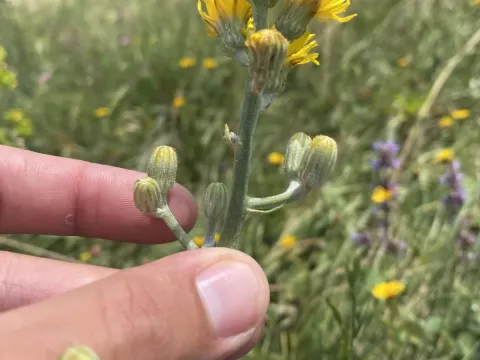
Hungarian hawksbeard
Crepis pannonica
Hungarian hawksbeard (Crepis pannonica) is a perennial herbaceous plant belonging to the Asteraceae family. It is typically found in meadow habitats, characterized by its sturdy growth habit and high adaptability to varying temperate conditions.
What the section contains
Hungarian hawksbeard
The plant originates from the steppe and forest-steppe zones of Central and Eastern Europe. It flourishes in regions with a continental climate, demonstrating a strong tolerance for drought and periodic water deficits.
Regarding soil preferences, Crepis pannonica thrives in well-drained, calcareous soils. It is particularly well-adapted to alkaline or neutral soil environments, which are common in its native distribution range.
Agronomic management of this species focuses on maintaining open space to ensure adequate sunlight exposure. It is a heliophytic plant that experiences reduced development if overcrowded by dense shrubbery or taller grasses.
The agricultural significance of the plant is primarily centered on its role in forage production. It provides a reliable source of biomass for grazing livestock when managed within a sustainable pasture system.
The most common disease affecting the Hungarian hawksbeard is powdery mildew, which tends to colonize the foliage during warm and humid periods, leading to stunted development of the plant.
Root rot represents a significant threat primarily on poorly drained soils where stagnant moisture impairs the root respiration process and facilitates fungal infection.
Pests, particularly aphids and larvae of various insects, may feed on the young shoots and leaves. While these rarely cause total crop failure, they can reduce the nutritional quality of the forage biomass.
Effective management against these threats involves regular monitoring and the implementation of mowing schedules that help manage the microclimate within the meadow canopy.
Cultural control, such as promoting plant diversity and avoiding excessive fertilization, contributes significantly to maintaining the resilience of Crepis pannonica against both pests and pathogens.