
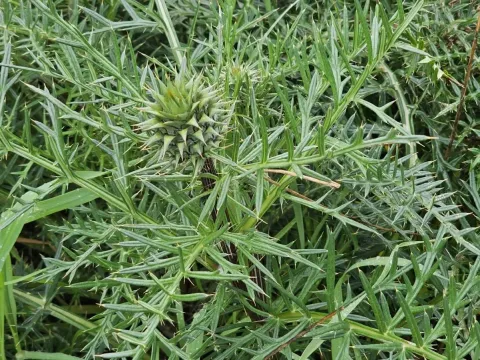
Cynara humilis
Cynara humilis
Cynara humilis, commonly known as a species of wild or low artichoke, belongs to the Asteraceae family. It is a hardy herbaceous perennial native to the Mediterranean region, adapted to warm, dry summers and mild winters.
What the section contains
Cynara humilis
This plant thrives in well-drained, fertile soils with a neutral or slightly alkaline pH. It is highly intolerant of waterlogged conditions, which makes site selection for soil drainage critical to long-term plant health.
Full sun is an essential requirement for this species. Without adequate exposure to direct sunlight, the plant struggles to develop the necessary structural integrity for flowering, and the vegetative growth becomes weak and prone to fungal infections.
The climate requirements involve a stable growing season with sufficient heat to trigger flower head formation. Although it is more drought-tolerant than the common globe artichoke (Cynara cardunculus), supplemental irrigation is recommended for higher yields.
Proper spacing is required to allow for air circulation, which helps manage the microclimate around the plant. A distance of at least 70 centimeters between plants is recommended to prevent competition for soil nutrients and light.
Harvesting the edible parts of Cynara humilis requires careful timing to ensure the best culinary quality. The flower buds should be collected when they are still firm and the scales are tightly closed before blooming.
Using sharp gardening shears is recommended for clean cuts, which prevents mechanical damage to the main stem of the plant. After the main bud is harvested, the plant may produce secondary buds on side branches if conditions remain favorable.
Post-harvest handling is critical because the buds begin to dehydrate rapidly once detached from the plant. They should be stored in a cool, humid environment to maintain their freshness for culinary preparation.
When the plant reaches the end of its harvest season, it is beneficial to cut back the foliage to allow the plant to enter a state of dormancy. This practice redirects energy to the root system, ensuring vigorous regrowth in the following year.
Regular inspection during the harvest period allows for the detection of any late-season pest activity on the buds. Early harvesting of infested or damaged buds can prevent the spread of problems to the rest of the crop.
Aphids are a significant threat to Cynara humilis, as they cluster on the tender tips of the foliage and flower stalks. Their feeding can cause curling of the leaves and stunt the development of the flower buds.
Slugs and snails are particularly problematic in early spring when the new growth emerges. They feed on the leaves, leaving behind trails and ragged edges that can lead to secondary bacterial infections in the moist tissue.
Powdery mildew is a fungal disease that thrives in stagnant air and moderate temperatures. The appearance of white dusty patches on the leaf surfaces indicates the need for improved spacing or localized thinning of the foliage.
Root rot, primarily caused by phytophthora or pythium species, remains the most severe threat to the plant's survival. Avoiding over-irrigation and ensuring the soil has excellent drainage is the primary method of prevention.
Vertebrate pests, such as voles or rabbits, may graze on the roots or crown during the winter when other food sources are scarce. Protecting the base of the plant with physical barriers is a common and effective mitigation strategy.
The cultivation of Cynara humilis typically starts with seed propagation in early spring. Starting seeds indoors provides a controlled environment, which improves germination rates and allows for a longer growing season in cooler regions.
Seeds should be planted in a high-quality seed starting mix, barely covered with soil, and kept consistently moist until emergence. A period of cool stratification can significantly improve the success rate for dormant seeds.
Once the danger of frost has passed, seedlings should be gradually hardened off before being transplanted into their permanent outdoor location. This transition helps the plant adapt to the intensity of direct UV radiation.
Direct seeding in the field is possible in areas with long, warm seasons. The soil must be well-prepared, fine-tilled, and free of large debris to ensure that the small seedlings can establish their roots without obstruction.
Consistent moisture management during the first few weeks after sowing or transplanting is vital. Once the root system is established, the plant becomes more resilient to fluctuations in soil moisture levels.
The yield of Cynara humilis is moderate, as it produces smaller flower heads compared to its domesticated relatives. These smaller heads often possess a concentrated flavor, which is highly appreciated in regional gastronomy.
Yield consistency is closely linked to the nitrogen and potassium levels in the soil. Balanced fertilization promotes healthy vegetative growth, which serves as the energy reservoir for producing multiple reproductive stalks.
Seasonal weather patterns have a major impact on the total output. Unusually rainy springs may reduce the number of buds, while long, sunny summers generally support a more robust harvest profile for this species.
Productivity typically peaks in the second and third year of the plant's life cycle. As the plant ages beyond this point, the size of the buds may diminish, signaling the need for division or total plantation renewal.
The cumulative yield of the entire patch can be optimized through selective harvesting, where only the most mature buds are removed daily, encouraging the plant to channel resources into the development of secondary buds.