
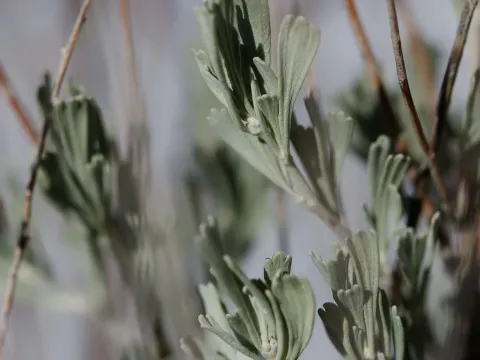
Big sagebrush
Artemisia tridentata
Big sagebrush (Artemisia tridentata) is a perennial evergreen shrub belonging to the Asteraceae family. It is a cornerstone species of the Western North American landscape, known for its iconic silvery-gray foliage and distinct aromatic scent.
What the section contains
Big sagebrush
This species is highly adapted to arid and semi-arid environments. It thrives in well-drained, deep, alkaline soils. It is critical to ensure that the site has excellent drainage, as the roots are highly susceptible to rot in waterlogged conditions.
Climatically, it prefers regions with cold winters and hot, dry summers. It is remarkably drought-tolerant, utilizing deep taproots to reach moisture stored in the subsoil, which makes it an ideal candidate for dryland restoration projects.
Agrotechnical management is minimal once the plant is established. It does not require high levels of fertilization; in fact, over-fertilization can reduce the plant's natural hardiness and longevity, leading to excessive succulent growth.
Beyond its ecological importance, big sagebrush is increasingly used in xeroscaping and as a source of phytochemicals. It serves as essential cover and forage for various wildlife species throughout the harsh winter months.
The primary biological threat to big sagebrush plantations is fungal root rot, triggered by poor soil aeration or an improper irrigation regime that allows moisture to pool around the base of the shrub.
Insects such as sagebrush defoliators and various beetles can occasionally cause significant damage, particularly to younger stands that have not yet established a deep and extensive root system.
Weed competition is a major obstacle during the seedling phase. Invasive annual grasses can outcompete young sagebrush for moisture, significantly increasing mortality rates during the first growing season.
Environmental stress, specifically prolonged unseasonal humidity, can lead to powdery mildew outbreaks, which diminish the plant's aesthetic and physiological capacity to survive the subsequent drought.
Effective management includes clearing competing vegetation around young plants and ensuring that the planting density allows for adequate airflow, which is the best defense against airborne pathogens.