
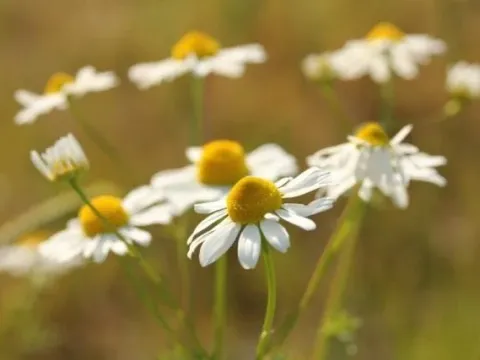
Chamomile
Chamomilla
Chamomile (Matricaria chamomilla) is a highly valued annual plant belonging to the Asteraceae family. It is known for its medicinal properties and adaptability to various temperate climates, making it a popular agricultural crop.
What the section contains
Chamomile
The seeds are exceptionally small, requiring a firm and fine seedbed to ensure proper germination. Sowing can be performed either in late autumn or early spring, depending on regional climatic conditions.
For late autumn sowing, seeds are broadcast just before the soil freezes. This allows for natural vernalization, resulting in early and uniform seedling emergence as soon as the ground warms up.
In spring, sowing should be done as early as the soil conditions permit. Seeds must be sown very shallowly, no deeper than 0.5 cm, as they require light to germinate effectively and lack the reserves to sprout from deeper layers.
Maintaining a steady moisture level in the topsoil during the first two weeks is critical for the establishment of the crop, as young seedlings are particularly sensitive to desiccation.
Chamomile thrives best in well-drained, sandy loam soils with a neutral or slightly acidic pH. While it is adaptable, it performs poorly in compacted or waterlogged soils, which increase the risk of root rot.
The plant requires full sun to maximize the production of essential oils. Shaded areas often lead to leggy growth, reduced flower density, and lower concentrations of active compounds like chamazulene.
Crop rotation is essential in chamomile production. It is highly susceptible to soil-borne pathogens if grown continuously in the same location; therefore, a minimum break of 3–4 years between plantings is recommended.
Weed management is a vital requirement, especially during the early vegetative stage. Chamomile seedlings grow slowly and can be easily outcompeted by aggressive annual weeds.
Nutrient management should focus on balanced fertilization. Phosphorus and potassium are particularly beneficial for promoting robust root development and high-quality flower head formation.
The commercial yield of dried chamomile flowers typically ranges from 800 to 1,200 kilograms per hectare. This variation depends largely on crop management, environmental conditions, and the specific variety planted.
Optimal plant density is key to achieving consistent yields. Proper spacing ensures that every plant receives sufficient light and air circulation, which is crucial for preventing mold and rot in the flower heads.
In peak growing conditions, with adequate moisture and mild temperatures, yields can potentially reach 1,500 kilograms per hectare of dried floral material.
Productivity is also linked to the timing of the first harvest. Early and repeated harvesting encourages the plant to produce more secondary branches and additional flower buds throughout the season.
The quality of the final product is determined by the ratio of flower heads to debris. Clean harvesting practices significantly increase the market value of the dried crop.
Fungal diseases, such as powdery mildew and downy mildew, are the primary threats to chamomile crops, especially in humid or poorly ventilated fields. These pathogens can rapidly diminish crop health.
Pests like aphids and leafhoppers frequently infest the plants, targeting the tender buds and stems. Their feeding activity can stunt growth and ruin the quality of the harvested flowers.
Integrated Pest Management (IPM) is the best approach to control these threats. This includes maintaining field hygiene, clearing weeds, and ensuring proper air circulation through optimal row spacing.
Key mitigation strategies include:
- Regular monitoring for early signs of infection or infestation;
- Avoiding over-fertilization with nitrogen, which can attract aphids;
- Implementing biological controls when necessary;
- Ensuring that equipment is cleaned between different fields.
Chemical intervention should be avoided during the flowering phase to prevent pesticide residues in the harvested medicinal flowers.
The harvest phase is the most critical operation for chamomile. The flowers should be picked when the white ray florets are horizontal and the yellow disk florets are not yet fully matured.
Timing is precise; if harvesting is delayed, the flowers lose their active oil content and may begin to shatter during collection. Frequent passes through the field are often necessary to collect flowers at their peak.
Flower heads should be picked with minimal stem length, ideally no more than 1–2 cm. Excess stem material increases drying time and lowers the quality grade of the medicinal product.
Mechanical harvesters are standard for large-scale operations. These machines use special comb-like headers to strip only the flower heads, leaving the bulk of the vegetative material behind.
Post-harvest handling must be immediate. Flowers should be moved to a drying facility within hours to prevent fermentation, which can lead to color loss and the degradation of delicate essential oils.