
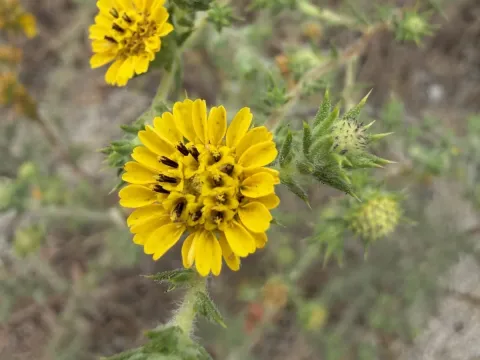
Centromadia
Centromadia
Centromadia seeds are typically sown in the autumn or early spring, depending on the specific climatic region of cultivation.
What the section contains
Centromadia
For successful germination, the seeds require moderate soil moisture and air temperatures that remain within a moderate range.
The optimal sowing depth is between 1 and 2 centimeters, ensuring good contact with moist, friable soil.
The seeding rate must be calculated based on the target stand density, as the plant tends to branch significantly under low density conditions.
During spring sowing, it is critical to provide irrigation during the first weeks after emergence until the taproot system is established.
Centromadia belongs to the Asteraceae family and is a drought-tolerant plant adapted to Mediterranean-type climates.
The crop prefers well-drained, loamy, or sandy soils and does not tolerate waterlogging in the root zone.
The plant demonstrates high tolerance to saline soils, making it a promising candidate for marginal land use.
Full photosynthesis requires maximum solar exposure throughout the entire growing season.
- High heat tolerance
- Low mineral fertilizer requirements
- Preference for loose soil structures
Centromadia yield depends on moisture availability and soil fertility, generally providing moderate output typical for wild-origin species.
The primary value lies in seed harvesting, which are rich in vegetable oils, though large-scale industrial processing is currently limited.
The plant biomass can be utilized as a secondary fodder resource if harvested before the stems become overly lignified.
Productivity increases significantly when regular, moderate irrigation is provided during critical flowering phases.
In experimental field conditions, seed yield parameters are comparable to those of other wild oilseed species.
Major threats to the crop include fungal diseases that flourish in conditions of high humidity and poor air circulation.
Insect pests, such as aphids and various species of weevils, can damage the generative organs during the flowering period.
Root rots pose the greatest danger in heavy soils with poor drainage, often leading to rapid seedling mortality.
Competition with weed flora during the early development phase is a critical factor requiring timely weed control measures.
Lack of crop rotation leads to the accumulation of soil-borne pathogens specific to the Asteraceae family.
Harvesting is performed at the stage of full seed maturity, when the flower heads acquire a characteristic brownish hue.
It is important to monitor the moisture level of the flower heads, as Centromadia is prone to seed shattering when dried excessively.
Mechanical harvesting requires prior desiccation to equalize the moisture content of the stems and the seed material.
After collection, the seeds must be thoroughly cleaned of impurities and dried in well-ventilated storage areas.
Seed stock must be stored under low-humidity conditions to prevent the degradation of the oil-rich raw material.