
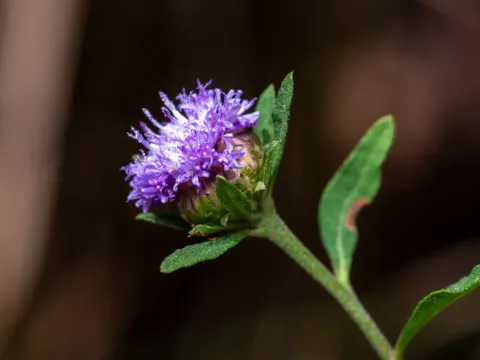
Centratherum violaceum
Centratherum violaceum
The sowing of Centratherum violaceum is typically carried out in greenhouses using a high-quality seed starting mix. Seeds are shallowly sown to ensure they receive enough light to trigger germination.
What the section contains
Centratherum violaceum
Temperature control is essential during the early stages. Maintaining a steady range of 20–22°C ensures uniform emergence of seedlings within two to three weeks.
Transplanting into individual containers should be done carefully once the first true leaves have developed. This step helps in establishing a strong root ball before field planting.
Acclimatization, or hardening off, is necessary before moving plants outdoors. Gradually exposing them to outdoor conditions over a week prevents transplant shock.
Planting in the field occurs only after all danger of frost has passed, as the crop is strictly warmth-loving and will not survive chilly nights.
Centratherum violaceum, a member of the Asteraceae family, is a herbaceous plant known for its vibrant purple flower heads. It thrives in warm climates and requires long days for optimal performance.
The plant performs best in full sun exposure. While it can tolerate partial shade, maximum sunlight is preferred to ensure a dense growth habit and profuse blooming.
Soil should be well-drained and nutrient-rich. It is sensitive to waterlogging, which often leads to root rot, so incorporating organic matter or coarse sand into the soil is recommended.
Irrigation practices must be precise. Watering should be deep and directed to the base of the plant to keep the root zone hydrated without keeping the foliage excessively damp.
Fertilization with a balanced NPK fertilizer during the peak growing season supports continuous flower production and maintains the intense color of the inflorescences.
Root rot is the most common issue when soil drainage is poor or irrigation is excessive. Prevention focuses on maintaining porous soil structure and avoiding standing water.
Fungal diseases like powdery mildew can appear in environments with low airflow. Proper spacing between plants is crucial to ensure adequate air circulation and reduce disease spread.
Pest pressure is often limited to aphids and spider mites. These pests typically thrive in hot, dry conditions, making regular monitoring of leaf undersides a necessary management practice.
Integrated Pest Management (IPM) techniques, including the use of neem oil or targeted insecticides, can effectively control pest populations without disrupting the local ecosystem.
Sanitation is key to disease management. Removing and destroying infected plant tissue helps prevent the buildup of pathogens throughout the growing cycle.