
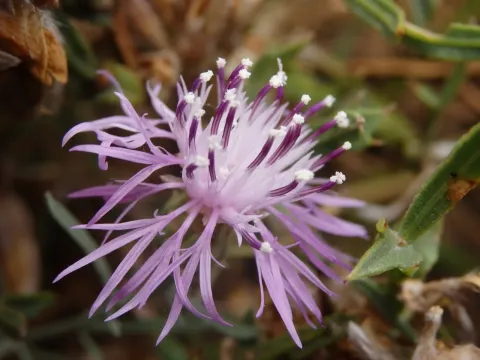
Centaurea langei
Centaurea langei
Centaurea langei is a specific member of the genus, known for its adaptability to rocky environments. Seeds should be sown in autumn to allow for natural cold stratification, which significantly improves germination rates in the following spring.
What the section contains
Centaurea langei
When starting indoors, seeds require a well-draining substrate mix of peat and perlite. Sowing should be shallow, as light is beneficial for the emergence of the seedlings; therefore, covering seeds with only a thin layer of fine soil is recommended.
The optimal germination temperature ranges from 15 to 20 degrees Celsius. Once the first true leaves appear, seedlings should be carefully pricked out into individual pots to prevent root competition and promote the development of a strong taproot.
Acclimatization to the outdoors is critical for nursery-grown plants. A gradual transition process over 7–10 days helps the young plants adjust to direct sunlight and fluctuating ambient temperatures.
For direct seeding in the garden, ensure the soil surface is weed-free and finely tilled. Spacing should be maintained at roughly 30 centimeters to allow for optimal air circulation between mature plants.
As part of the Asteraceae family, Centaurea langei thrives in sunny, well-ventilated positions. It is highly adapted to calcareous, alkaline soils where drainage is excellent, preventing waterlogging of the sensitive root system.
The plant demonstrates significant drought tolerance once established, owing to its deep-reaching root structure. During the first growing season, however, consistent but moderate moisture is necessary to support initial vegetative establishment.
Soil pH plays a vital role in nutrient availability; the plant performs best in neutral to slightly alkaline conditions. If the soil is acidic, the addition of lime is recommended before planting to ensure optimal growth and flower color intensity.
The species is suited to temperate climates, showing excellent resistance to late frosts. However, protection from excessively humid, stagnant winter conditions is required to prevent crown rot, which is the most frequent cause of winter loss.
Fertilization should be applied sparingly, as high nitrogen levels often result in soft, floppy growth that lacks the architectural rigidity typical of the species. A balanced, low-concentration fertilizer during the pre-flowering stage is usually sufficient.
Productivity in Centaurea langei is measured by its ornamental capacity and the consistency of seed production for propagation. A healthy, mature plant can produce multiple inflorescences throughout the extended summer season.
Deadheading faded flowers not only enhances the visual neatness of the planting area but also redirects the plant's energy towards producing additional floral buds, effectively extending the blooming window.
Seed harvest should occur once the seed heads dry naturally on the stem and turn a light brown color. Careful handling is required to prevent the seeds from shattering, as the species has evolved natural dispersal mechanisms that trigger upon slight movement.
For commercial nursery use, yield is maximized by maintaining a high degree of uniformity in watering and nutrient delivery. This results in compact, high-quality plants that are preferred by landscape contractors and garden centers.
Yield stability is strongly influenced by the presence of pollinators. Since the plant is highly attractive to bees and butterflies, ensuring a healthy pollinator population in the vicinity is beneficial for seed set.
The primary threats to Centaurea langei include powdery mildew and other fungal pathogens that thrive in high humidity. Proper spatial management and avoiding overhead irrigation are the most effective preventive measures.
Insects like aphids and spider mites can become problematic during hot, dry spells. These pests often congregate on tender new growth, causing leaf curling and reduced photosynthesis efficiency if left unchecked.
- Powdery Mildew — observed as white powdery spots on foliage.
- Crown Rot — often results from poor soil drainage.
- Aphids — colonize shoot tips and weaken the plant.
- Mites — cause chlorotic spots on leaves during drought.
Monitoring for signs of infestation should be a regular gardening task. Integrated pest management, emphasizing the use of natural predators or insecticidal soaps, is preferred to maintain the health of the local ecosystem.
To prevent disease transmission, gardening tools should be sterilized between tasks. Furthermore, removing plant debris at the end of the season reduces the availability of overwintering sites for various pathogenic spores.
Harvesting cut flowers should be done in the cool morning hours to maximize turgidity. Stems should be cut when the buds are just beginning to open to provide the best display life in a vase.
When harvesting seeds, the entire seed head should be cut and placed into breathable bags to complete the drying process. This prevents loss during transit or storage and ensures high germination quality for the following season.
Stored seeds must be kept in a cool, dry place. Using silica gel packets within airtight containers helps maintain low humidity, which is critical for extending seed viability beyond the initial year.
The leftover biomass, if free of disease, can be shredded and added to compost piles. It provides valuable carbon-rich material that improves soil structure when returned to the garden beds.
Professional harvest of botanical material for drying and crafting requires specific attention to color preservation. Drying in a dark, well-ventilated room helps maintain the vibrant hues of the bracts and florets.