
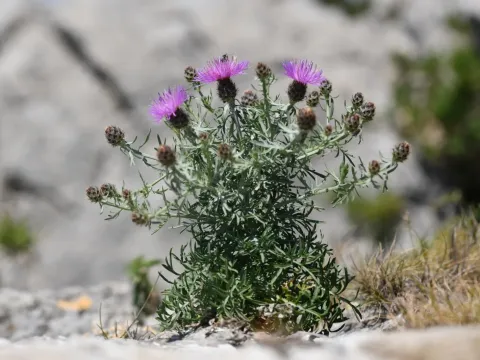
Centaurea corymbosa
Centaurea corymbosa
Centaurea corymbosa is a rare herbaceous perennial plant belonging to the Asteraceae family. It is an endemic species with a very limited natural range, primarily found in restricted areas of southern France, specifically within specific limestone geological formations.
What the section contains
Centaurea corymbosa
The culture has strict requirements regarding its growing environment. It thrives on rocky, calcareous soils that are poor in nutrients but provide excellent drainage. These conditions are essential for the plant to establish its root system and minimize competition from more aggressive vegetation types.
Climate preferences for this species are centered on a Mediterranean climate profile. It is highly drought-tolerant and requires full sun exposure throughout the growing season. Lack of sufficient light or excessive moisture in the soil can lead to rapid deterioration of the plant population.
Botanical features include distinct corymbose inflorescences, which give the plant its specific name. The plant structure is adapted to harsh, shifting environments, featuring a robust root system that helps anchor it to unstable, rocky slopes. The leaves are typically narrow and adapted to minimize water loss.
Regarding its utility, this species is not cultivated for agricultural purposes. Its primary value lies in conservation biology and botanical research. Protecting this species is vital for maintaining local biodiversity and studying plant adaptations to extreme environmental niches.