
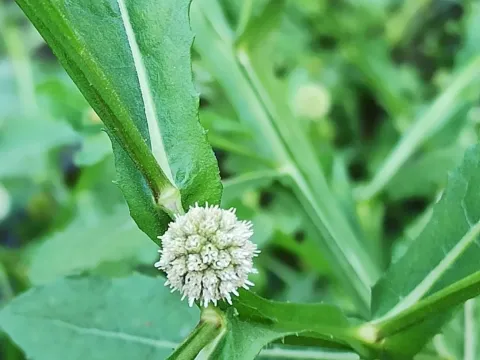
Sphaeranthus africanus
Sphaeranthus africanus
Sphaeranthus africanus is a perennial herb belonging to the Asteraceae family. This species is native to tropical and subtropical regions of Africa, Asia, and Australia, where it thrives in humid environments.
What the section contains
Sphaeranthus africanus
The plant is commonly found in wetland areas, near rivers, and in irrigation ditches, indicating a strong requirement for consistent soil moisture throughout its growth cycle.
Climate requirements for this culture are strictly tropical, necessitating stable high temperatures throughout the year. It does not possess frost tolerance, making it suitable only for specific geographic zones.
Soil quality should be high, with sufficient organic matter to support the plant's rapid growth. While it loves moisture, the soil structure should allow for minimal drainage to prevent root suffocation.
Agrotechnical practices involve maintaining clear rows, consistent irrigation scheduling, and nutrient management to maximize the biomass and secondary metabolite production.
The main threats to Sphaeranthus africanus cultivation include fungal diseases that flourish in the humid, tropical conditions required by the plant itself.
Root rot and leaf spot pathogens are common, often appearing when plant density is too high or air circulation within the field is insufficient.
Pest pressure from aphids and various leaf-eating beetles can significantly impact the quality of the raw material, necessitating integrated pest management.
Preventative measures are essential, such as selecting resistant cultivars if available and implementing proper drainage systems to mitigate water-related stress.
Monitoring the fields regularly is critical for early detection of infestations, allowing for targeted interventions that minimize the impact on the environment.
Harvesting Sphaeranthus africanus is typically scheduled during the peak flowering stage to ensure the highest concentration of active biochemical compounds.
The harvesting process involves cutting the aerial parts of the plant, which are the primary source of the pharmacological value of this species.
Following harvest, the material is immediately moved to drying facilities. Drying must be performed carefully under low-temperature conditions to protect volatile oils.
Once dried, the plant material undergoes a processing stage where it is cleaned of any debris or contaminants to meet commercial quality standards.
Packaging is the final step, involving moisture-proof materials to ensure the stability of the plant's constituents during storage and transportation.