
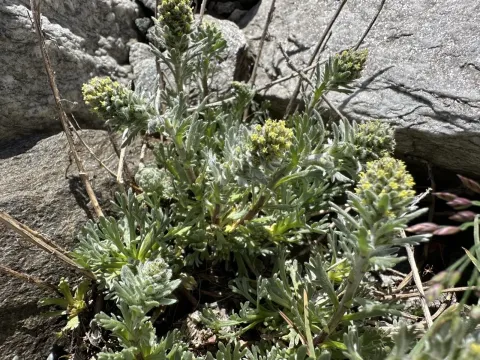
Genepi
Artemisia genipi
Genepi (Artemisia genipi) is a perennial plant native to high-altitude alpine regions. Because of its specific ecological origin, the cultivation process starts with careful seed selection and preparation for sowing during the early spring months.
What the section contains
Genepi
Seeds are tiny and require a specific cold-stratification process to break dormancy. Placing seeds in a moist medium at low temperatures for several weeks significantly improves the germination rate and uniformity of the crop.
Direct sowing in fields is rarely recommended due to the slow growth rate of young seedlings, which makes them vulnerable to weeds. Instead, professional growers use greenhouse-raised trays to establish healthy plants before transplanting.
The substrate for sowing must be light, porous, and sterile to prevent damping-off. Seeds should be surface-sown and only lightly covered with soil, as they require light for optimal germination success.
Transplanting into the field is carried out once the risk of frost has passed. Spacing is crucial to ensure that each plant has enough room for air circulation, preventing the buildup of humidity.
The primary requirement for successful Genepi cultivation is a stable environment that mimics its natural habitat. The soil must be extremely well-draining, ideally rocky or sandy, to prevent root rot.
This plant thrives in full sunlight exposure. Any form of shading or obstruction from neighboring plants will drastically reduce the essential oil content and weaken the overall vitality of the Genepi crop.
Temperature management is another critical aspect. While the plant is hardy and cold-tolerant, it struggles during heatwaves. A cool, mountain-like climate with plenty of fresh air is the ideal environment for its biological cycle.
Irrigation should be managed with caution. Over-watering is the most common mistake made by beginners. The soil should be allowed to dry out between watering cycles to ensure the roots receive proper oxygenation.
Minimal fertilization is required. Unlike leafy vegetables that thrive on nitrogen, Genepi prefers nutrient-poor soil. Excessive feeding usually results in fast, weak growth that lacks the high concentration of secondary metabolites needed for commercial use.
Commercial yields for Genepi are generally low due to the slow maturation process of the plant. It typically takes two full seasons before a harvestable yield can be gathered from a new plantation.
On average, growers can expect approximately 600 to 1,000 kilograms of dried plant material per hectare, depending on local conditions and sunlight availability. Success is measured by quality and aroma rather than raw mass.
The plant reaches its peak potential during the second and third years of life. After this, consistent, high-quality harvesting requires careful management and the occasional rejuvenation of the plot.
Yield quality is determined by the presence of bitter compounds and essential oils, which are harvested in the form of the entire aerial part of the plant during the flowering stage.
Given the labor-intensive nature of its cultivation and the specific climate needs, Genepi remains a niche crop with high economic value for specialty liquor producers and the pharmaceutical industry.
Fungal pathogens are the most significant threat to Genepi plantations. Root rot, caused by standing water or excessively damp soil, can devastate a field in a very short period of time.
Powdery mildew can affect the foliage during high-humidity seasons, especially when the plants are grown in areas with poor airflow. This infection directly diminishes the quality of the essential oils.
Pests like spider mites can be problematic in dry, hot conditions. While natural predators can help manage infestations, constant vigilance is required to prevent major damage to the soft, aromatic tissues of the plant.
Effective prevention strategies include crop rotation and ensuring that no stagnant water accumulates around the base of the plant. Improving soil aeration is the most effective way to prevent fungal issues.
Weed control is also vital, as young Genepi plants have difficulty competing with aggressive weeds. Regular hand-weeding is preferred over chemical interventions to maintain the product's premium quality.
Harvesting Genepi is a precise operation that must be done manually. Mechanical harvesters are not suitable because they can easily crush the delicate stems and leaves, leading to spoilage.
The harvest should occur when the plants are in full bloom, which is when the concentration of essential oils is at its maximum. This is the critical window for capturing the best market value for the harvest.
Timing the harvest for the morning, after the dew has evaporated but before the heat of the day reaches its peak, ensures the highest quality of the aromatic components.
After being cut, the plants should be dried in a cool, dark, and well-ventilated area. Rapid drying in excessive heat or direct sunlight will cause the essential oils to evaporate, destroying the quality of the product.
Proper storage involves keeping the dried herbs in airtight, light-protected containers to preserve their distinct bitter-aromatic profile for a long period before final use.