
Johnsonia lupulina
Johnsonia lupulina
Description
Growing requirements
Johnsonia lupulina belongs to the Asphodelaceae family. This perennial herb is endemic to the southwestern regions of Western Australia, where it occupies specific ecological niches within the native heathlands and woodlands.
The species thrives in sandy or gravely soils that provide excellent drainage. Because it is native to nutrient-poor environments, the plant does not require high levels of fertilization and may actually suffer from excessive nutrient intake.
Climate requirements for this plant involve high light intensity and distinct seasonal patterns. It is well-adapted to the hot, dry summers typical of its native range but requires careful management of soil moisture during the dormant season to prevent rot.
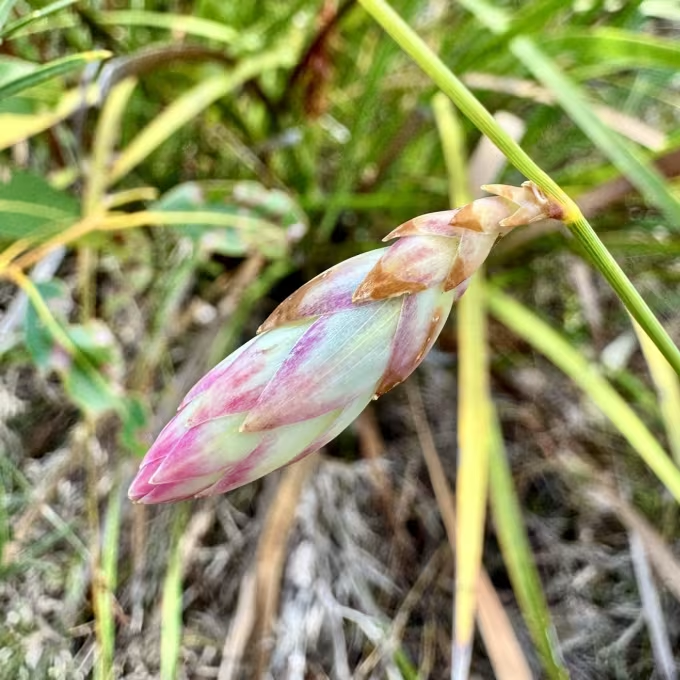
Botanically, it is characterized by its basal rosettes of leaves and distinct inflorescences. The flowers are protected by prominent, papery bracts that turn from green to reddish-brown, creating the visual effect of a hop-like spike, which makes the plant highly attractive for botanical enthusiasts.
While not a traditional broad-acre crop, Johnsonia lupulina is utilized in specialized horticulture and native garden landscapes. Its unique architectural form makes it a sought-after specimen for designers focusing on drought-tolerant and endemic flora.
Main diseases and pests
Root rot caused by pathogens like Phytophthora is the primary threat to the longevity of the plant. This is usually triggered by inadequate drainage or water-logged conditions during the winter months.
Pests such as mealybugs or aphids can settle in the leaf axils, particularly when the plant is grown in containers or sheltered environments with poor air circulation.
Excessive phosphorus content in fertilizers is known to be toxic to many Western Australian native plants, leading to rapid deterioration of the root system and yellowing of foliage.
Overcrowding in landscaping can lead to fungal issues, as the plant requires good airflow around its base to keep the crown dry and healthy throughout the year.
The use of systemic fungicides is generally discouraged unless an active infection is identified; instead, focus on soil sanitation and strict irrigation management to ensure plant health.