
Eminium spiculatum
Eminium spiculatum
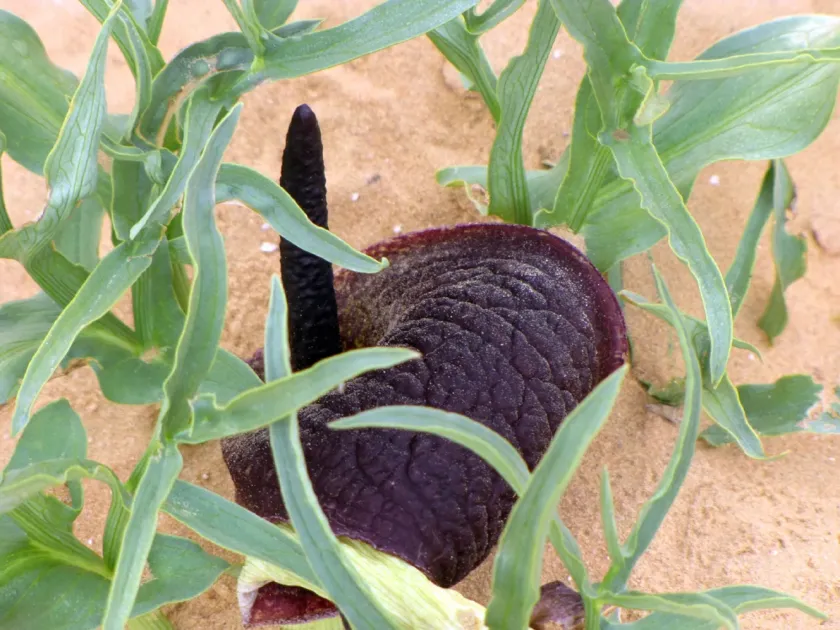
Description
Growing requirements
Eminium spiculatum is a perennial herbaceous plant belonging to the Araceae family. Originating from the Middle East and Mediterranean regions, it is naturally adapted to rocky, arid environments where it thrives in well-draining soil conditions.
For successful cultivation, the plant requires a substrate that mimics its natural habitat: loose, alkaline, and highly permeable soil. Drainage is the most important factor, as any waterlogging will cause immediate tuber rot and the eventual death of the plant.
The climate must provide distinct seasonal variations, including a warm, dry summer rest period. During the growing season, which typically occurs in cooler spring months, the plant requires bright, indirect sunlight to develop its unique arrow-shaped foliage and spikelike inflorescences.
Botanically, the species is defined by its tuberous rootstock and the specialized spadix inflorescence wrapped in a protective spathe. Its lifecycle is ephemeral, disappearing completely during the heat of the summer to protect the tuber from desiccation.
Economic use of this plant is largely ornamental or specialized. Due to the high concentration of calcium oxalate crystals in the tissue, it is not suitable for direct consumption and requires significant processing if harvested for starch, though this is rare in modern agricultural practices.
Main diseases and pests
The primary threats to this culture are fungal and bacterial pathogens that target the rootstock, especially during periods of unseasonal humidity. Proper ventilation and soil management are critical to prevent the colonization of these pathogens.
Pests such as aphids and spider mites can attack the foliage during the active growth stage, leading to physiological stress. In some soil conditions, nematodes may also pose a risk to the integrity of the underground tubers.
Integrated Pest Management (IPM) is recommended to mitigate these risks. This includes the use of certified pathogen-free planting stock and maintaining strict moisture control within the growing environment to ensure the tubers remain healthy.
Chemical control measures should be limited to those approved for bulbous or ornamental crops. Systematic fungicides applied as a soil drench can be effective if caught in the early stages of a fungal outbreak, but prevention remains the best defense.
Routine inspections of the foliage and upper soil layer are necessary during the active season. Promptly removing and destroying any plants that show signs of systemic infection or wilting is essential for maintaining the health of the entire crop.