
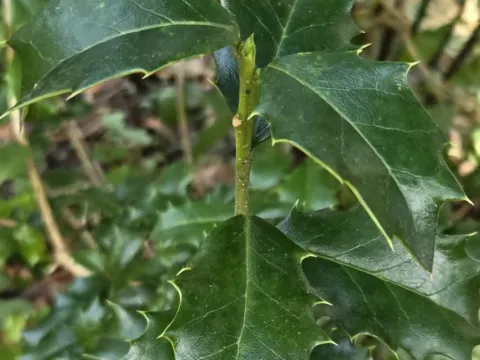
Colchis holly
Ilex colchica
Colchis holly (Ilex colchica) is an evergreen shrub belonging to the Aquifoliaceae family. Native to the Caucasus region, it thrives in the understory of broad-leaved and coniferous forests, known for its glossy, leathery leaves and decorative dark berries.
What the section contains
Colchis holly
The plant demands a mild, humid climate with stable temperatures. In cultivation, it performs best in sheltered locations that are protected from harsh, drying winds and extreme frost during winter months, which can cause leaf burn.
Soil requirements focus on fertility and drainage. It prefers deep, humus-rich, and slightly acidic to neutral soils. It is essential to ensure that the site provides excellent drainage, as the roots are highly susceptible to rot in waterlogged conditions.
Light management is crucial for the development of Ilex colchica. While it can adapt to various light levels, partial shade is ideal, as direct exposure to scorching midday sun can damage the foliage and stress the plant systemically.
Routine mulching is highly recommended to mimic forest floor conditions, helping to regulate soil moisture and temperature. Consistent watering is necessary, especially during dry spells, to maintain the plant's health and aesthetic appeal.
The primary threats include fungal diseases such as leaf spot and various types of root rot, often triggered by poor air circulation and excessive dampness in the root zone during the dormant season.
Pests like scale insects, aphids, and mites are common adversaries. They can quickly infest the dense canopy, causing stunted growth, discolored leaves, and severe damage if left unmonitored during the spring and summer periods.
Effective management includes integrated pest control strategies, using horticultural oils for scale insects and specific miticides when populations exceed the threshold for minor aesthetic damage.
Environmental stress, such as drought or severe winter cold, often acts as a precursor to disease. Keeping the plant in a vigorous state through appropriate fertilization and site selection is the best preventative measure.
Regular sanitation of the area, including the removal of dead or diseased branches, is vital to prevent the spread of spores and pests within the shrubbery.
- Prune in late winter or early spring before new growth starts.
- Ensure adequate spacing between plants to maintain ventilation.
- Monitor the undersides of leaves for early signs of insect activity.