
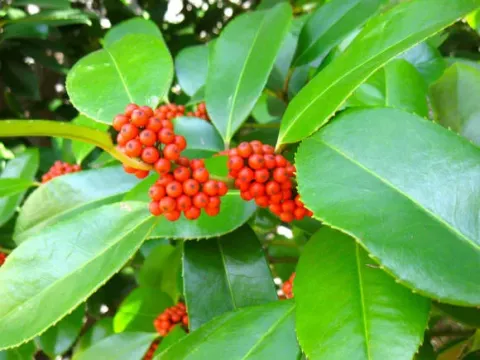
Broad-leaved holly
Ilex amplifolia
Broad-leaved holly (Ilex amplifolia) is an evergreen woody species belonging to the Aquifoliaceae family. This plant is known for its broad, leathery foliage and dense growth habit, making it a staple in various landscape projects.
What the section contains
Broad-leaved holly
The plant originates from regions characterized by temperate, humid climates. To ensure healthy development, it requires sites that are sheltered from harsh, drying winds, which can easily cause winter burn on the foliage of younger specimens.
The crop thrives in fertile, well-drained soils with a slightly acidic pH. Proper drainage is essential, as the species is highly sensitive to waterlogged conditions, which can lead to root system decay and rapid decline of the plant.
Regarding light requirements, this holly prefers partial shade. While it can survive in full sun if soil moisture is consistently managed, intense afternoon exposure can cause leaf scorching, reducing the aesthetic value of the shrub.
Agrotechnical maintenance includes consistent mulching with organic matter, such as pine bark or peat, which helps regulate soil moisture levels and maintains the necessary acidity for optimal nutrient uptake.
The most significant pests affecting Ilex amplifolia are scale insects and mealybugs. These pests attach themselves to the stems and leaves, extracting sap and weakening the plant, which often results in stunted growth and chlorosis.
Fungal diseases, specifically leaf spot, are common threats when plants are grown in overcrowded conditions. Poor air circulation within the canopy allows moisture to persist on the leaves, creating a conducive environment for pathogen spread.
Effective pest management involves the application of horticultural oils or systemic insecticides at the first signs of infestation. Regular scouting is recommended to catch population surges before they cause permanent damage.
Cultural practices such as sanitation pruning are vital for disease prevention. Removing dead or overlapping branches improves airflow through the plant, significantly reducing the likelihood of fungal colonization on the inner foliage.
If a severe fungal outbreak occurs, applying copper-based or systemic fungicides is necessary. All applications should be done thoroughly, ensuring full coverage of the foliage to inhibit spore germination and further spread.