
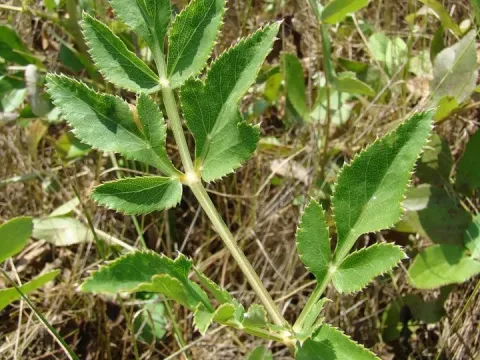
Peucedanum latifolium
Peucedanum latifolium
Sowing of Peucedanum latifolium should be performed in late autumn or early spring as soon as the soil is workable. Seeds require stratification, making autumn sowing the most effective method for ensuring uniform germination.
What the section contains
Peucedanum latifolium
The seeds should be sown at a depth of 1-2 centimeters. It is crucial to press the soil lightly after sowing to ensure proper seed-to-soil contact, which promotes moisture absorption and better emergence rates.
For commercial cultivation, row spacing should be maintained between 45 and 60 centimeters. This distance provides adequate light exposure and allows for mechanical weeding and maintenance of the crops during the growing season.
Seedlings emerge relatively slowly, so weed management is essential during the initial growth phase. Keeping the area free from competing plants significantly improves the root system development.
Once the plants develop 2-3 true leaves, thinning is recommended, leaving 20-25 centimeters between plants. This spacing ensures each plant receives sufficient nutrients and light for optimal rosette growth.
Peucedanum latifolium belongs to the Apiaceae family and thrives in fertile, well-drained loamy or sandy soils. The plant is sensitive to waterlogging, which can easily lead to root rot and significant crop loss.
As a light-loving species, it requires open, sunny locations for successful production. In shaded areas, the plant's vegetative growth slows down, and the concentration of beneficial bioactive compounds is reduced.
The crop is highly cold-hardy, making it suitable for various temperate climates. However, consistent moisture supply during the first half of the summer is necessary for vigorous biomass production.
Soil pH should ideally be neutral or slightly alkaline. Incorporating organic matter, such as compost, into the soil improves its structure and nutrient content, which directly benefits the development of the roots.
Routine cultivation, such as hoeing between rows, is necessary to prevent soil crusting and improve aeration. Regular, moderate irrigation is beneficial during prolonged dry spells to maintain steady plant growth.
The yield of Peucedanum latifolium depends heavily on the growing conditions and the age of the plantation. Roots reach their peak quality and mass by the second or third year of cultivation.
The primary economic product is the root, which contains essential oils and coumarins. Proper agricultural management ensures that the harvest becomes commercially viable by the end of the second vegetative cycle.
The aerial part of the plant is also harvested for medicinal use, with the highest concentration of active ingredients found during the active flowering stage. Timely harvesting is essential for maintaining product quality.
To sustain plantation productivity, it is necessary to renew the crop every 4-5 years. Continuous planting in the same spot without rotation leads to soil exhaustion and smaller, lower-quality roots.
Standard industrial practices, including regular nutrient management and weed control, ensure consistent yields of dry root material throughout the entire productive lifespan of the plantation.
Typical diseases for this crop include fungal infections such as powdery mildew. These issues often arise in overcrowded plantations with high humidity, making preventive spacing and air circulation critical.
Root rots pose a severe threat when drainage is poor or when the soil remains constantly wet. These pathogens are particularly problematic in heavy or overly acidic soils, requiring careful site selection.
Common pests include the parsnip moth and aphids, which damage leaves and flowers. These insects can significantly impact seed production and the overall health of the plant if left uncontrolled.
Pest management should prioritize preventive measures, such as removing wild Apiaceae weeds near the fields. Chemical treatments should be restricted to minimal use and applied only before the flowering phase begins.
Regular monitoring of the plantation for signs of disease or pest infestation is vital for early intervention and prevention of large-scale spreading of pathogens.
Harvesting of the roots is conducted in late autumn, after the vegetative period ends, or in early spring before growth restarts. At these times, the concentration of active medicinal compounds is highest.
Specialized equipment, such as root harvesters or plows, is used to lift the roots from the soil without causing mechanical damage. Any damage during the harvest can lead to rapid deterioration of the material.
After excavation, the roots must be thoroughly cleaned with cold water. Prompt processing is required to prevent moisture-induced molding or rot, which can occur quickly in damp, harvested batches.
Drying is performed at 40-50 degrees Celsius using convection dryers to preserve volatile essential oils. Excessive heat should be avoided as it leads to the loss of key chemical constituents.
The dried raw material should be stored in dry, well-ventilated rooms using breathable containers. Proper storage conditions allow the product to maintain its quality for up to two years.