
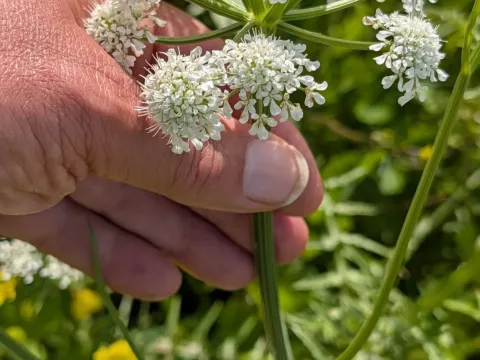
Pignut
Oenanthe pimpinelloides
Pignut (Oenanthe pimpinelloides) is a perennial herbaceous plant belonging to the Apiaceae family. In agricultural practice, it is primarily propagated by seeds sown during early spring when soil temperatures stabilize.
What the section contains
Pignut
Seeds should be planted at a shallow depth, approximately 1–2 cm, in well-prepared, friable soil. Proper seedbed preparation is essential to ensure uniform germination across the field.
Stratification of seeds prior to sowing can significantly improve emergence rates. In commercial settings, precision seeding equipment is used to maintain uniform plant density and row spacing of 30–45 cm.
Weed control during the early stages of growth is crucial for the successful establishment of the crop. Manual or mechanical cultivation between rows helps keep the field clear of competing invasive plants.
Once established, the plant develops a deep root system that anchors it firmly, making it resistant to minor disturbances and facilitating efficient nutrient uptake from the deeper soil layers.
This species thrives in temperate climates with mild winters and moderate summers. It is native to various regions across Europe and the Mediterranean, where it typically occupies open, well-drained habitats.
The ideal soil type is a loamy, moisture-retentive substrate with a neutral pH level. While it prefers moist conditions, it is highly sensitive to waterlogged soils, which may cause root damage.
Exposure to full sunlight is necessary for optimal development. Shaded areas often result in stunted growth and a significant reduction in biomass production compared to sun-exposed fields.
During the growing season, consistent moisture is required, especially during the vegetative phase. Drought conditions can stress the plants, necessitating supplemental irrigation in arid regions.
Maintaining soil fertility through periodic application of organic or mineral fertilizers is recommended to sustain high biomass yields over multiple years of cultivation.
The primary agricultural use of Oenanthe pimpinelloides is as a forage component in pastures. It is valued for its nutritional profile, which provides essential minerals and vitamins to grazing livestock.
Biomass production is highest when the crop is managed with optimal mowing cycles, typically allowing for two harvests per growing season under favorable climate conditions.
The forage quality is peak at the onset of the flowering stage. Farmers monitor the crop maturity closely to ensure the highest levels of digestibility and nutrient content for animals.
Sustainable management practices, including controlled grazing, ensure that the plant persists in the field without the need for frequent re-seeding, thereby optimizing long-term yields.
While yields can fluctuate based on environmental factors, the crop remains a steady contributor to the total forage mass when grown in appropriate ecological zones.
Like many members of the Apiaceae family, pignut can be susceptible to fungal diseases such as powdery mildew, especially in high-humidity or poorly ventilated environments.
Common insect pests include aphids and various larvae that feed on flower heads or stems. Integrated pest management (IPM) strategies are recommended to minimize damage.
Preventative measures, such as maintaining proper spacing to increase airflow and using crop rotation, play a vital role in reducing the incidence of pathogens throughout the field.
Regular field scouting allows for early detection of potential outbreaks, enabling timely intervention before significant economic damage occurs to the crop stand.
Biological control agents and targeted, environmentally friendly applications are preferred to manage threats without compromising the safety of the forage for livestock consumption.