
Ligusticopsis wallichiana
Ligusticopsis wallichiana
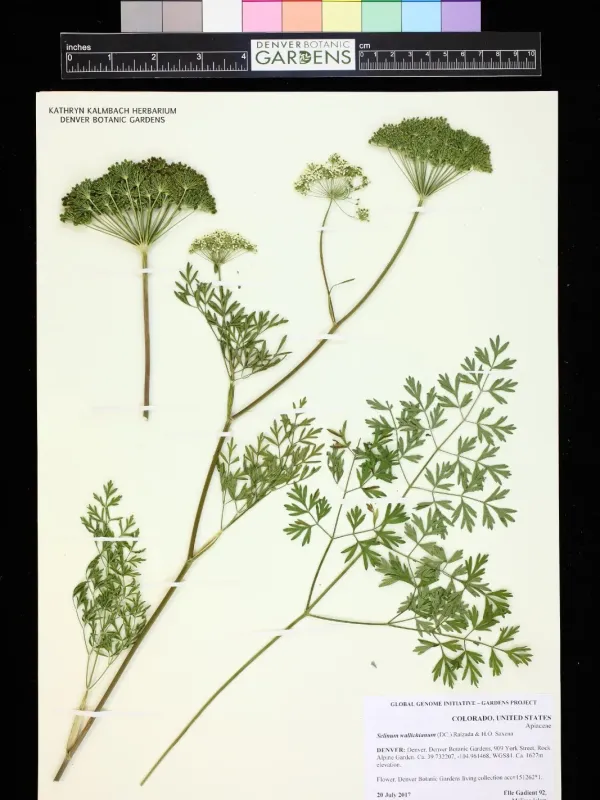
Description
Sowing dates
Sowing Ligusticopsis wallichiana requires patience, as the seeds often exhibit deep dormancy. Providing a period of cold stratification is essential; seeds should be kept at low positive temperatures for 4 to 6 weeks to break this dormancy period before spring sowing.
The seeds should be sown at a shallow depth of approximately 0.5 to 1 cm. A light, porous sowing mix is recommended to allow the fragile seedlings to emerge without difficulty. Consistent moisture must be maintained, but the surface should not be continuously soaked.
Seedling growth is characteristically slow in the initial stages. Weed control is critical during this period, as the young plants are easily outcompeted by more aggressive weeds. Manual weeding is preferred to prevent damage to the delicate root systems.
Once the plants develop several true leaves, they should be transplanted into individual pots or a nursery bed with extra space. This stage is crucial for hardening the plants before they are finally moved to their permanent outdoor location.
Spacing requirements are vital for large-scale production, with a recommended density of 15 to 20 plants per square meter. This ensures adequate air circulation and nutrient access for each plant, promoting uniform development across the field.
Growing requirements
Ligusticopsis wallichiana is a perennial herbaceous plant belonging to the Apiaceae family. Originating from the high-altitude regions of the Himalayas, this species thrives in subalpine meadows and rocky environments where environmental conditions are quite demanding.
The plant possesses a robust taproot system and compound leaves, features that are essential for survival in high-altitude landscapes with rocky, well-draining soils. These structural adaptations allow the plant to thrive in regions with thin air and intense ultraviolet light exposure.
Success in cultivating Ligusticopsis wallichiana largely depends on the soil quality. The ideal substrate is a neutral to slightly acidic, well-draining medium. Avoiding waterlogged soil is paramount, as the plant is highly susceptible to root decay when moisture levels are uncontrolled.
Regarding climatic requirements, the plant prefers cooler temperatures and significant diurnal temperature variations. It does not tolerate heat stress well, making it a challenging crop for lowland or temperate farming without appropriate microclimate management.
The economic value of this crop is primarily found in its medicinal and aromatic properties. The roots and seeds are used in traditional medicine, valued for their essential oils and unique chemical profile which contribute to their effectiveness as natural tonics.
Main diseases and pests
The most common threat to Ligusticopsis wallichiana is fungal pathogen infestation, particularly root rot and fusarium wilt. These pathogens thrive in stagnant water conditions and poor ventilation, which can lead to rapid crop failure if left unmonitored.
Implementing effective drainage systems and using appropriate fungicides is a standard approach for managing these risks. Preventive maintenance, such as keeping the area free of decomposing plant debris, helps reduce the fungal load in the soil.
In terms of pests, aphids are the primary concern for this crop. They infest the leaves and flowers, which not only causes direct damage but also facilitates the transmission of various viral pathogens that can stunt the plant's growth.
Integrated pest management, involving both biological controls and targeted insecticide applications, is the most effective strategy. Crop rotation should also be strictly practiced, avoiding fields previously used for other Apiaceae family members to prevent soil-borne diseases.
Overall plant health is closely tied to proper site selection. Choosing well-ventilated, sunny sites that mimic the plant's natural high-altitude home significantly boosts its resistance to common pests and diseases.
Harvesting
Harvesting the roots is a long-term commitment, as the plant typically requires three to four years of growth before reaching peak maturity. This duration allows the plant to accumulate a sufficient quantity of high-quality essential oils.
The harvest should take place in late autumn when the plant enters dormancy. Roots must be carefully excavated to ensure minimal physical damage, as bruised roots are prone to rapid degradation and quality loss during drying.
Once harvested, the roots should be cleaned thoroughly with cool, running water. Any remaining soil particles must be removed to ensure a clean product. The cleaning process should be gentle to preserve the integrity of the root surface.
Drying is a critical step in preserving the crop. Roots should be dried in a shaded, well-ventilated area at temperatures not exceeding 45°C. Excessive heat will cause the evaporation of volatile aromatic compounds, significantly reducing the commercial value.
Storage should be conducted in airtight, cool, and dark conditions. Proper packaging prevents moisture ingress and the degradation of active chemical components, ensuring that the harvested material maintains its quality until it reaches the end-user.