
Ferulago nodosa
Ferulago nodosa
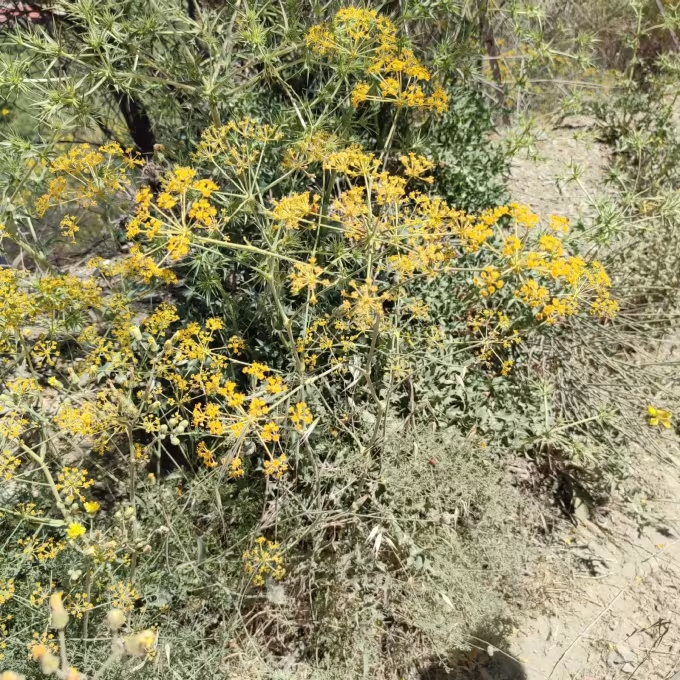
Description
Sowing dates
Sowing of Ferulago nodosa is best performed in the autumn or early spring after seed stratification. The crop requires precise seedbed preparation due to its slow germination process and initial development phase.
Seeds should be planted at a depth of 1-2 centimeters in well-tilled, friable soil. Maintaining adequate row spacing is essential for mechanical weeding and proper airflow within the plantation.
Growth is slow during the first year, as the plant primarily focuses on developing a deep, strong taproot system. Weed control during this initial stage is critical for ensuring crop survival.
Pre-treatment of seeds with growth stimulants can significantly improve uniformity in emergence. Following these steps helps the crop establish itself before the intense summer heat begins.
The choice of location must be permanent because the plant does not tolerate transplanting well. Selecting a site with proper drainage and full sunlight is a prerequisite for long-term productivity.
Growing requirements
Ferulago nodosa belongs to the Apiaceae family and is inherently adapted to dry, stony slopes and arid steppes. It thrives in well-drained, sandy, or loamy soils with neutral to slightly alkaline pH levels.
The plant is highly drought-tolerant, making it an excellent candidate for regions with limited irrigation resources. Excessive soil moisture or waterlogging poses a severe risk of root rot.
Full sun exposure is vital for the crop, as shade causes weak stems and a significant decline in the concentration of essential oils. Maximizing light interception is the key to quality production.
The ideal climate is a temperate or semi-arid region with hot, dry summers. The plant easily handles the significant temperature fluctuations typical of open field environments.
Low-fertility soils are generally preferred, as excessive nitrogen leads to vegetative overgrowth that reduces the accumulation of biologically active secondary metabolites. Balanced mineral fertilization should be applied sparingly.
Yield
The yield of Ferulago nodosa is measured by the total dry biomass and the essential oil content. Peak productivity is generally achieved from the third year of the plantation's life cycle.
Harvesting for raw material is conducted during the peak flowering stage when the concentration of essential compounds is highest. Harvesting timing is crucial for maximizing the crop's economic value.
Stable yields can be maintained for up to 7 years with proper maintenance and field hygiene. Consistent soil management post-harvest ensures that the plants remain healthy and productive over time.
The quality of the derived essential oils is highly dependent on solar radiation intensity. Higher light exposure during the flowering period directly correlates with better chemical profiles.
Routine pruning of the inflorescences in the early budding stage can stimulate lateral growth. This practice effectively increases the total amount of harvestable material per hectare.
Main diseases and pests
Root rot caused by fungal pathogens is the primary threat, usually resulting from poor soil drainage or excessive rainfall. Managing moisture levels is the most effective way to prevent plant death.
Pests such as aphids and umbellifer-specific bugs can damage tender shoots during the spring growth phase. Monitoring these populations is necessary to prevent significant yield losses.
- Powdery mildew under high humidity conditions.
- Cutworms affecting stem integrity in young plants.
- Rust diseases occurring after prolonged wet periods.
- Nematodes that may attack the taproot in light, sandy soils.
Preventative strategies focus on rigorous crop rotation and the removal of plant debris after the harvest season. Chemical intervention should be avoided in favor of integrated biological control.
Building plant resilience through optimal soil conditions significantly lowers the impact of infections. Healthy plants are far more capable of withstanding local stressors than malnourished ones.
Harvesting
Harvesting consists of two main activities: gathering the vegetative mass during flowering and extracting the roots during the autumn dormancy period. Specialized machinery is recommended to maintain efficiency.
Stems are mowed at a height of 10-15 centimeters, ensuring the raw material remains free of soil and debris. Cleanliness during this stage is essential for meeting industry quality standards.
Roots are harvested using a subsoiler or specialized plow designed to lift them without causing mechanical damage. Once lifted, roots must be washed immediately to remove residual soil.
Post-harvest drying must occur in a well-ventilated, shaded environment or a low-temperature industrial dryer. Temperatures above 45 degrees Celsius can degrade the aromatic oils.
The final product should be stored in breathable containers within a dry, dark warehouse. Proper storage allows the herb to maintain its potency for up to two years after harvesting.