
Poison hemlock
Conium maculatum L.
Description
Sowing dates
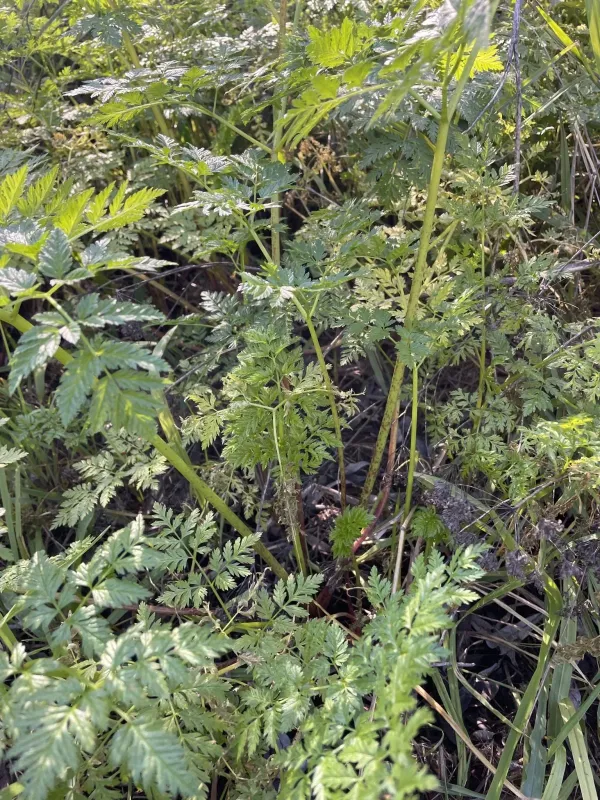
Poison hemlock is a biennial herbaceous plant belonging to the Apiaceae family. During the first year, it develops a rosette of leaves, and in the second year, it produces a tall, branching stem topped with compound umbels.
Sowing is typically performed in late autumn or early spring. Seeds require a cold stratification period to improve germination rates. They should be planted at a shallow depth of 1.5–2 centimeters in well-prepared soil.
When sowing in spring, soil temperatures should reach at least 6–8 degrees Celsius. Consistent moisture is crucial during the first weeks after germination to ensure the establishment of a robust root system.
Standard row spacing is between 45 and 60 centimeters, which allows for effective weed control and facilitates mechanical maintenance during the early growth stages of the crop.
Since the plant grows quite rapidly in its second year, reaching heights of up to 2.5 meters, it is important to select a location that provides sufficient space and avoids shading other sensitive crops.
Growing requirements
This crop thrives in fertile, well-drained loamy or sandy soils with a neutral to slightly alkaline pH. Proper aeration is essential, as waterlogged conditions can lead to root rot and poor plant vigor.
Poison hemlock is a light-demanding plant and should be grown in open, sunny areas. Exposure to direct sunlight is necessary for optimal development and for the synthesis of its chemical components.
The plant is highly hardy and can tolerate cold winter temperatures without the need for additional protection, making it suitable for cultivation in various temperate climates.
Agronomic management includes the application of nitrogen and potassium fertilizers during the active growth phase. Excessive organic matter should be avoided to prevent uncontrolled growth at the expense of alkaloid concentration.
Regular irrigation is needed during dry spells. Severe drought can stress the plant and trigger early flowering, which negatively impacts both the quality and quantity of the harvested plant material.
Yield
Crop yields of poison hemlock depend on soil fertility and precise agronomic practices. Under favorable conditions, producers can expect a yield of 15 to 25 centners of dry material per hectare.
The concentration of active alkaloids, such as coniine, peaks at the beginning of the flowering stage. Consequently, harvest must be timed precisely to capture this maximum concentration for pharmaceutical purposes.
Purity of the crop is paramount. Producers must ensure that no other Apiaceae species are present in the field, as cross-contamination can significantly degrade the quality and safety of the raw material.
Post-harvest, the material must be dried quickly at temperatures below 40 degrees Celsius. This prevents the degradation of heat-sensitive compounds and ensures the long-term stability of the product.
Quality control through laboratory analysis is a standard requirement for every batch to verify that the concentration of active substances meets pharmaceutical standards.
Main diseases and pests
Poison hemlock is naturally resistant to many pests due to its toxicity. However, improper field management can lead to outbreaks of powdery mildew, which can reduce the visual and chemical quality of the leaves.
Root systems may be susceptible to wireworms if the field was previously used for perennial grasses. Thorough soil cultivation and proper crop rotation are recommended to minimize these risks.
High humidity levels can encourage the development of fungal leaf spots. Preventive fungicide treatments may be applied during the pre-flowering stage, following strict agricultural safety protocols.
Aphids can occasionally infest young shoots, drawing sap and weakening the plant. If pest pressure exceeds economic thresholds, systemic insecticides can be used to mitigate the damage.
The most significant threat is the plant's potential to become an invasive weed. Prompt harvesting and thorough field cleaning are essential to prevent seeds from spreading to surrounding areas.
Harvesting
Harvesting is carried out during the peak flowering phase. Given the toxicity of the plant, personnel must use appropriate personal protective equipment to avoid skin contact and accidental inhalation of dust.
Mechanical harvesting is usually preferred for large-scale operations. It is important to ensure the harvested material is clean and free of soil, which simplifies the subsequent processing steps.
The harvested material should be transported to the processing facility immediately. Storing cut hemlock in piles can lead to fermentation, heat build-up, and the destruction of essential phytochemicals.
After harvesting, the field must be plowed deeply to destroy all plant residues. This prevents the growth of volunteers and minimizes the risk of accidental ingestion by livestock grazing in the area.
Comprehensive record-keeping of all harvesting procedures is essential for meeting international quality standards for medicinal raw materials.