
Halogeton glomeratus
Halogeton glomeratus (M. Bieb.) C. A. Mey.
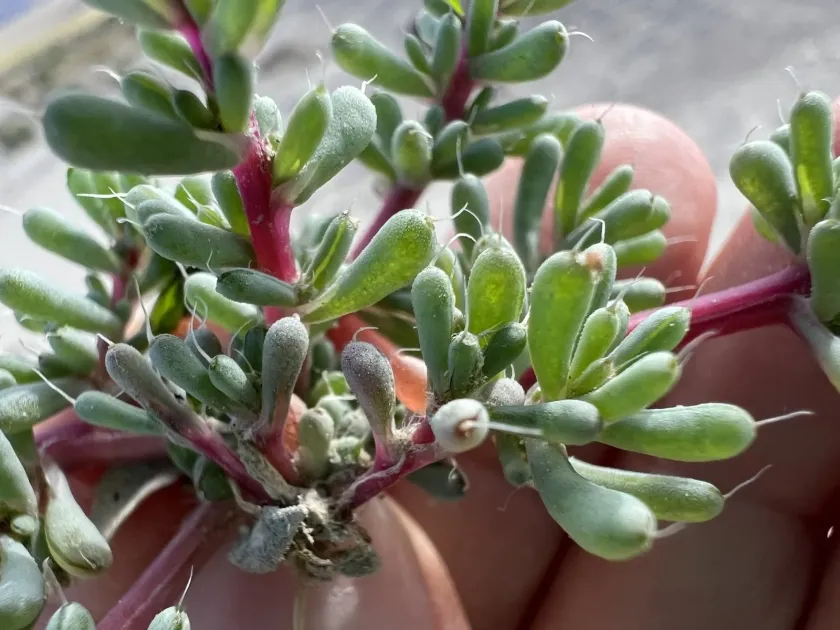
Description
Growing requirements
Halogeton glomeratus is an annual herbaceous plant belonging to the Amaranthaceae family. It is a highly specialized halophyte that thrives in environments with high salinity and low water availability.
Originally native to the arid regions of Central Asia, this plant has become a significant invasive species in North America, where it colonizes degraded rangelands and disturbed soils across semi-arid zones.
The botanical structure of the plant features succulent, fleshy leaves adapted to salt sequestration. Its deep taproot system allows it to access soil moisture effectively, providing a competitive advantage in dry environments.
Soil requirements for Halogeton are minimal, as it prefers alkaline and saline substrates where other vegetation fails to survive. It cannot tolerate waterlogging, which can lead to root degradation.
Climatic requirements are defined by extreme heat and drought tolerance. The plant requires significant sunlight to maintain its photosynthetic activity and completes its life cycle during short, intense growing periods.
Main diseases and pests
The primary concern regarding Halogeton is its toxicity to livestock. The plant accumulates high concentrations of oxalates in its tissues, which can be fatal to sheep and cattle if ingested in large quantities.
There are very few natural pests or diseases that affect this plant, which contributes to its status as a persistent and difficult-to-control invasive species in various agricultural regions.
Management of this species focuses on preventing seed production. Seeds are highly mobile, often spread by wind or water, which requires early intervention to prevent them from becoming established in new areas.
Cultural control methods involve maintaining healthy vegetative cover on rangelands, as healthy stands of perennial grasses can successfully compete with and suppress the germination of Halogeton seedlings.
Chemical control via selective herbicides is an option during the early stages of the life cycle. However, these applications must be executed carefully to avoid causing collateral damage to desirable forage vegetation.