
Good King Henry
Blitum bonus-henricus
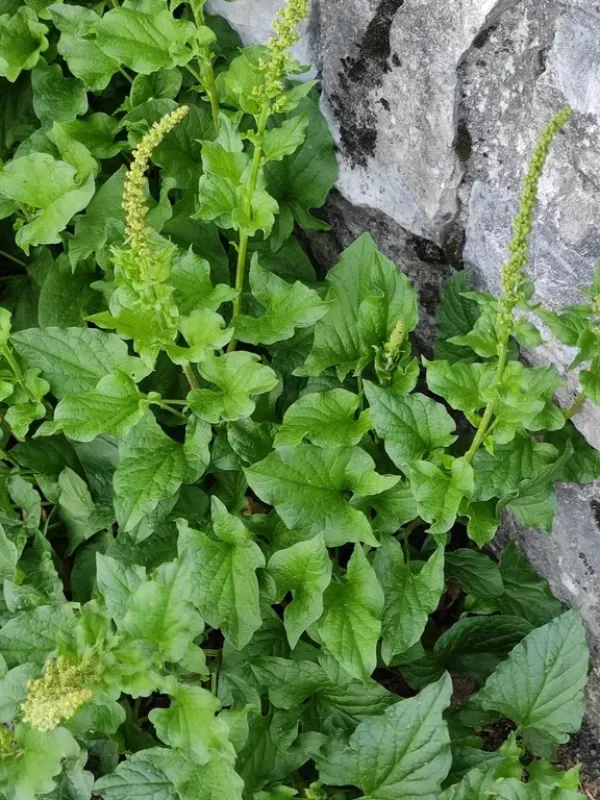
Description
Sowing dates
Good King Henry, known scientifically as Blitum bonus-henricus, is a hardy perennial vegetable belonging to the Amaranthaceae family. Seeds are typically sown in early spring or late autumn when soil temperatures are cool enough to trigger germination.
The seeds require stratification to break dormancy, which can be achieved by placing them in cold storage or sowing them outside before winter. They should be planted at a shallow depth of about 1 to 2 centimeters.
Once established, the plants form vigorous clumps. It is important to space rows at least 45 centimeters apart to provide enough room for the plants to spread over several years of growth.
Seedlings should be thinned when they reach a height of 5 centimeters, maintaining a distance of 30 to 40 centimeters between individual plants to ensure proper airflow and light penetration.
Because it is a long-lived perennial, careful site selection is crucial, as the plant can remain in the same location for up to seven years without needing replanting.
Growing requirements
This crop thrives in rich, well-draining loamy soils with high organic matter content. It prefers neutral to slightly alkaline soil pH levels, avoiding overly acidic or waterlogged peat-based substrates.
The plant is highly frost-tolerant and can survive harsh winters without special protection, making it an excellent choice for northern climates where other greens might struggle.
While Good King Henry can tolerate partial shade, it produces more lush foliage when grown in locations that receive adequate sunlight during the growing season.
Regular fertilization with nitrogen-rich organic matter in the early spring supports the vigorous development of new leaf rosettes, ensuring a steady harvest throughout the year.
Water management is vital; while the plant requires consistent moisture, over-saturation must be avoided to prevent root rot in heavier soil types.
Yield
Good King Henry is a productive perennial that becomes more reliable as it matures. Full harvest potential is typically realized from the second year onwards as the root system deepens.
Gardeners can expect a consistent yield of tender leaves, which can be harvested throughout the spring and early summer months by picking the outer leaves from the rosette.
Young flower stalks, which develop in early summer, are often harvested and consumed like asparagus, significantly increasing the overall economic value of the vegetable patch.
By preventing the plants from going to seed, the vegetative growth phase is extended, allowing for multiple harvests within a single growing season.
Proper maintenance, including consistent weeding and periodic feeding, allows a well-established bed to provide a high volume of nutritious greens for several consecutive years.
Main diseases and pests
The primary threats to the crop include fungal diseases like powdery mildew, which tend to proliferate in humid, overcrowded conditions with poor air circulation.
Aphids can frequently colonize the tender tips of the plants, particularly during dry spells, which may cause leaf curling and a decrease in plant vigor.
Soil-dwelling pests, including wireworms or cutworms, may occasionally damage the root neck, leading to the sudden wilting of mature plants in the garden.
Weed management is critical, as competing vegetation can harbor pests and decrease the amount of nutrients available to the crop, negatively impacting overall growth.
Preventative measures, such as avoiding overhead watering and maintaining adequate plant spacing, are usually sufficient to keep the crop healthy throughout its lifecycle.
Harvesting
The harvest season for leaves typically begins in late spring when the plants are large enough to withstand partial defoliation. Harvesting should be performed carefully by plucking leaves at the base.
When harvesting the edible flower stalks, it is important to cut them while they are still firm and succulent, before the buds fully open and the stalks become fibrous.
After each harvest, it is beneficial to lightly hoe the soil around the base of the plant and apply a gentle watering to stimulate the next flush of leaf growth.
Good King Henry greens are delicate and should be utilized shortly after harvesting to retain their freshness and nutritional content, as they do not store well for long periods.
In late summer, if seed saving is not desired, removing remaining flower stalks helps the plant store energy for the following season's growth instead of focusing on reproductive development.