
Strawberry blite
Blitum capitatum
Description
Sowing dates
Strawberry blite, scientifically known as Blitum capitatum, is a cold-hardy annual plant. Sowing seeds directly into the open ground should be performed in early spring as soon as the soil warms to 5-8 degrees Celsius, as the seedlings easily tolerate light frosts.
For an earlier harvest, growing it via seedlings is an option. Seeds should be sown 30-40 days before transplanting. The seeds have a long germination period, so pre-soaking them in growth stimulants is recommended to speed up the process.
The sowing scheme must account for the plant's habit, which can reach 50–70 cm in height. An optimal distance between plants is 40–50 cm, ensuring sufficient room for nutrition and proper air circulation.
This crop is prone to self-seeding, so if you grow it in the same spot for several consecutive years, thinning the seedlings becomes a necessary maintenance task to prevent overcrowding.
Seeds maintain their viability for up to 3-4 years, but using fresh seeds for mass sowing is always advised to ensure uniform emergence across the plot.
Growing requirements
Strawberry blite belongs to the Amaranthaceae family and is an undemanding crop that successfully adapts to various climatic conditions, including temperate regions.
The plant prefers sunny locations but can tolerate partial shade throughout the day. The choice of planting site significantly influences the intensity of fruit coloration and overall biomass production.
The crop does not have specific soil requirements, but it grows best in cultivated loamy soils with a neutral or slightly alkaline pH level. Excessive soil acidity is highly undesirable for development.
A vital requirement is consistent soil moisture. During dry periods, the plant requires regular watering, as moisture stress triggers premature bolting and reduces the quality of the edible berries.
Applying organic fertilizers before sowing is recommended to boost yields. Nitrogen-based top dressing can be applied during the growing season to encourage dense leafy mass development.
Yield
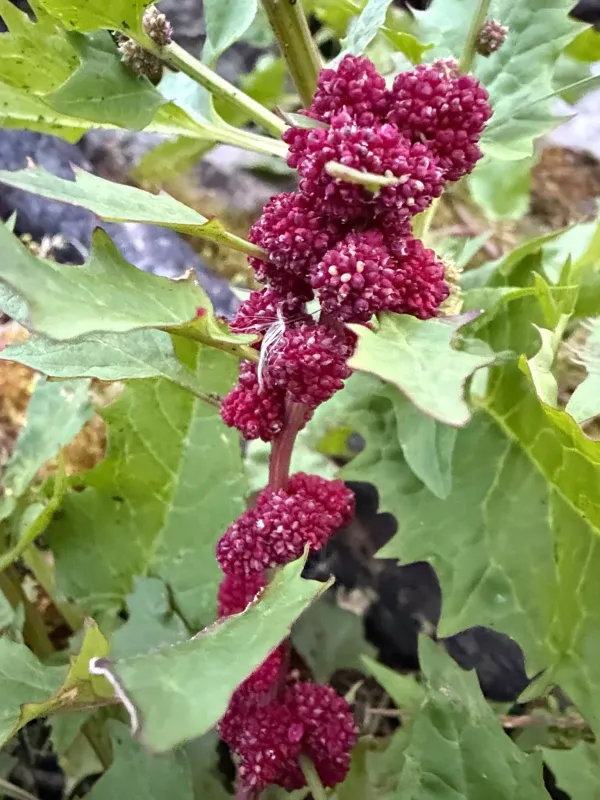
The agricultural value of strawberry blite lies in its dual-use nature: both the nutritious leaves and the specific flower clusters (resembling raspberry berries) are edible.
Leaf mass is ready for harvest within 40-50 days of germination. Harvesting leaves can be done selectively as they grow throughout the summer season.
The berries reach commercial maturity when they turn a deep, vibrant red color. Yield depends heavily on light levels and the regularity of irrigation provided during the growth cycle.
Under intensive management, one plant can produce up to 0.5–1 kg of berries per season. The overall productivity of this crop makes it a promising option for small-scale organic farms.
The ripening process is extended, providing multiple opportunities for harvest over several weeks, which is convenient for home gardens and local fresh market supply chains.
Main diseases and pests
Strawberry blite generally possesses a strong immune system, but under unfavorable growing conditions, it may suffer from powdery mildew, especially during periods of high humidity and temperature fluctuations.
Among pests, leaf-eating insects, such as cutworm larvae, pose the greatest threat, as they can quickly damage the plant's aesthetic and culinary value.
In rare instances, aphids may appear on young shoots. For pest control, using biological products or plant-based extracts is recommended to maintain the crop's organic status.
Disease prevention consists of crop rotation and avoiding overcrowding of the plants. Proper ventilation between rows is the best way to protect against fungal pathogens.
In the event of a severe pest infestation, the use of systemic insecticides should be avoided, as the berries and leaves are consumed raw and can easily accumulate pesticide residues.
Harvesting
Leaf harvesting is performed by carefully cutting or pinching off the outer petioles. It is crucial to leave the central growth point intact so the plant can continue to develop and form new foliage.
Berry harvest is carried out manually. Ripe berries are very delicate and do not withstand transportation well, so it is recommended to use or sell them immediately after picking.
The best time for harvesting is during the early morning hours, after the dew has evaporated. This preserves the freshness and marketability of the product for a longer duration.
For long-term storage, the berries can be dried or frozen. When processing, it is important to thoroughly wash the harvest, as soil particles can accumulate in the folds of the berries.
After the season, plants can be utilized in compost if they are free of disease, as the biomass is rich in minerals and makes an excellent soil amendment.