
Strawberry blite
Blitum virgatum
Description
Sowing dates
Strawberry blite, botanically classified as Blitum virgatum, is an annual plant belonging to the Amaranthaceae family. Sowing in open ground is best initiated in early spring as soon as the soil reaches a temperature of 5-8 degrees Celsius.
The plant can also be started indoors to ensure an earlier harvest. Seeds should be sown in seedling trays or peat pots about four to six weeks before the last expected frost date, allowing for a steady transition into the garden.
Seeds are very fine and require light to germinate effectively, so they should be barely covered with a thin layer of soil or fine vermiculite. Maintaining consistent moisture is crucial during the germination phase to ensure a high success rate.
Once established, the seedlings are quite hardy and can withstand light frost, making them suitable for early-season planting in cooler temperate climates. Proper spacing of approximately 40 cm between plants is recommended for optimal development.
For a continuous supply of fresh leaves throughout the growing season, gardeners often implement a succession planting strategy, sowing new batches of seeds every two to three weeks until mid-summer.
Growing requirements
This crop thrives in full sun, which is essential for producing vibrant red fruit and healthy leaf growth. Shaded areas should be avoided as they often result in leggy plants and significantly reduced berry production.
The soil should be fertile, well-draining, and rich in organic matter. While the plant is quite versatile regarding soil types, it performs best in loamy substrates with a near-neutral pH level, ensuring good nutrient availability throughout the season.
Consistent irrigation is vital, particularly during the flowering and fruit-setting stages. While the plant can tolerate minor drought, adequate moisture levels prevent the berries from drying out and maintain the succulence of the leaves.
Proper airflow is essential to keep the foliage dry and reduce the risk of humidity-related fungal issues. Strategic placement in the garden away from tall, dense vegetation will help maintain good circulation around the plant.
While the plant is generally self-sufficient, a light application of balanced organic fertilizer can boost productivity. Excessive nitrogen, however, should be avoided as it encourages vegetative growth at the expense of fruit production.
Yield
Strawberry blite offers a dual-purpose harvest: edible greens and decorative, succulent fruits. Young leaves are harvested for fresh salads or cooked similarly to spinach, providing a nutritional boost during the early growing season.
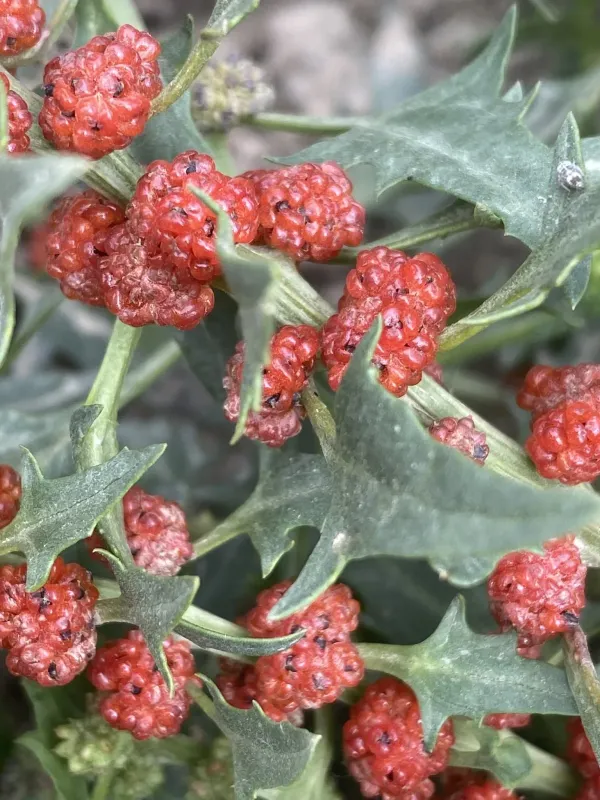
The berries, which are technically aggregated fruit clusters, are bright red when mature. They are prized for their mild, slightly sweet flavor and are primarily used in desserts, preserves, or as a natural garnish for sophisticated dishes.
Yield capacity depends heavily on sunlight exposure and plant health. Under favorable conditions, a gardener can expect a consistent supply of greens early on, followed by several weeks of fruit production as the season progresses.
Regular maintenance, including the removal of old or damaged foliage, helps focus the plant's energy on fruit production. This practice significantly increases the quality and size of the berries harvested throughout the summer.
Because the berries are highly delicate, they are not suitable for long-distance transport. The most efficient utilization involves immediate processing, culinary use, or freezing to preserve their unique color and nutritional properties.
Main diseases and pests
Flea beetles are the most frequent threat to young seedlings, as they can quickly defoliate leaves. Protective garden fabrics or early-season dusting with wood ash are effective, organic deterrents against these pests.
Powdery mildew can occur if the plant is grown in overly crowded conditions with poor air circulation. Proper spacing and avoiding overhead watering help keep the foliage dry and mitigate the risk of fungal outbreaks.
Aphids might appear on the undersides of leaves, especially during periods of stress. Natural pest control methods, such as neem oil or insecticidal soaps, are generally sufficient to manage infestations without affecting food safety.
Root rot is a potential concern if the soil remains waterlogged. Ensuring that the planting area is well-drained and strictly adhering to appropriate irrigation schedules will prevent the development of root-borne pathogens.
As a whole, strawberry blite is a resilient plant that rarely falls victim to severe viral or bacterial infections, provided it is grown in a favorable environment with appropriate care and crop rotation practices.
Harvesting
Harvesting of leaves begins roughly four to five weeks after sowing. It is best to collect the outer, younger leaves, which allows the central crown to continue producing fresh growth throughout the season.
Fruit harvesting is performed when the berries are fully colored, soft, and easy to detach. It is best to gather the fruit in the morning after the dew has evaporated, as this ensures maximum quality and shelf life.
Since the fruits ripen sequentially on the plant, harvesting should be performed as a multi-stage process. Consistent picking prevents fruit from becoming overripe, which can attract birds and other wildlife to the patch.
Post-harvest, the berries should be kept in a cool, dry place. Because they have very thin skins, they should be handled with extreme care to avoid bruising, which would rapidly degrade the quality of the harvest.
Once the plant has exhausted its reproductive cycle or the weather turns significantly colder, the entire plant should be harvested or cleared to maintain garden cleanliness and prepare the area for future crops.