
Bomarea patacocensis
Bomarea patacocensis
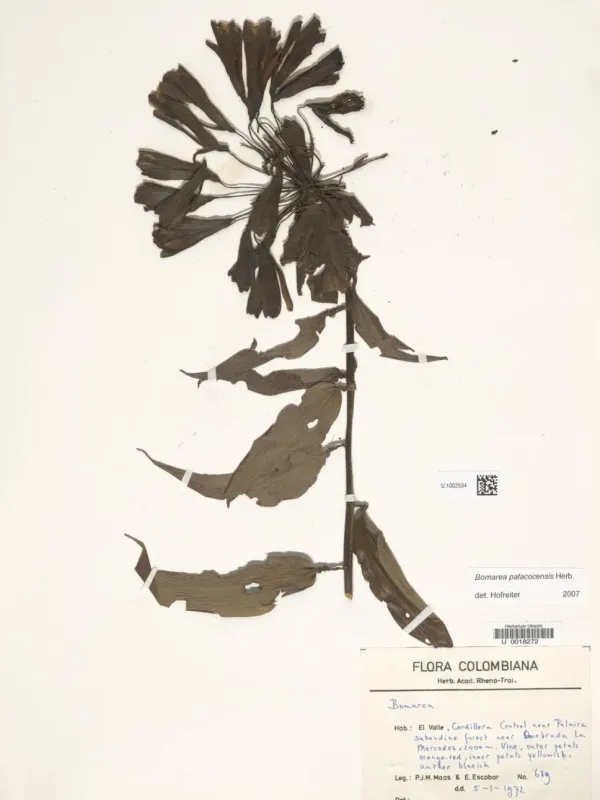
Description
Sowing dates
Propagation of Bomarea patacocensis is most commonly achieved via seeds, which require prior stratification to improve germination rates. The optimal time for sowing is early spring as day length increases, providing a natural boost to seedling development.
Seeds should be sown in a light, well-draining substrate composed of peat and sand. Maintaining a stable temperature between 18–20 degrees Celsius is crucial until germination occurs, a process that can take anywhere from a few weeks to several months.
Once true leaves appear, seedlings are transplanted into individual pots, ensuring sufficient room for root system development. Moving the plants outdoors or into permanent containers should only occur after the risk of late frosts has completely passed.
To accelerate growth during the active vegetation period, moderate application of nitrogen fertilizers is recommended. Excessive feeding at early stages can lead to weak stems, so balancing micronutrients is essential for sturdy growth.
Alternatively, division of rhizomes from mature specimens during the dormancy period is possible. This method allows the gardener to preserve the specific traits of the mother plant and produce more robust seedlings well-adapted to the local environment.
Growing requirements
Bomarea patacocensis belongs to the Alstroemeriaceae family and is a striking vining plant native to the high-altitude regions of the Andes. Its natural habitat, which includes humid forest zones, dictates its specific requirements for high air humidity and moderate temperatures.
The plant prefers semi-shaded locations with protection from harsh direct midday sunlight, which can scorch the foliage. The ideal spot provides dappled light, such as under tree canopies or on the eastern side of a structure.
The soil mix must be fertile, rich in organic matter, and slightly acidic. Good drainage is a critical requirement, as waterlogged soil around the roots can quickly lead to rot and plant mortality.
The temperature for successful growth should range from 15 to 22 degrees. During extreme heat, the plant requires extra air humidity, as a dry atmosphere negatively affects both the plant's health and its flowering intensity.
Special attention must be paid to supports, as this species is a climber. It requires sturdy vertical structures or netting for its twining stems to ascend, allowing it to reach sunlight and develop its signature showy inflorescences.
Main diseases and pests
The main pests for this crop include spider mites and aphids, which frequently target young leaves and buds when air humidity is too low. Regular plant monitoring is essential to catch early infestations before they spread.
Fungal diseases, such as root rot, often occur due to overwatering or poor soil aeration. Preventive measures include strictly controlling substrate moisture and applying fungicides at the first sign of wilting or discoloration.
Nematodes can affect the root system if non-sterile soil or infested planting material is used. Disinfecting the soil before planting is a vital agricultural step to protect the overall vitality of the crop.
Leaf spot disease may appear when the plant is grown in conditions with poor airflow. Removing affected plant tissue and applying copper-based treatments usually help to contain the infection throughout the garden area.
Providing adequate ventilation by avoiding dense spacing helps prevent moisture from lingering on leaf surfaces. Maintaining good garden hygiene is the key to ensuring the longevity of Bomarea patacocensis and preserving its decorative appeal.