
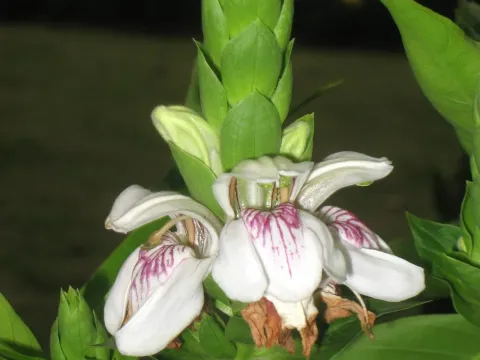
Adhatoda vasica
Adhatoda
Adhatoda vasica, commonly known as Malabar nut, is a perennial evergreen shrub belonging to the Acanthaceae family.
What the section contains
Adhatoda vasica
The plant originates from the tropical regions of Southeast Asia and India, flourishing in environments characterized by high humidity and warm temperatures.
Adhatoda requires well-drained, fertile soil with a slightly acidic to neutral pH balance to ensure optimal growth and metabolic activity.
It prefers full sun exposure but can adapt to partial shade during the early stages of its development in the nursery.
As a medicinal crop, it is cultivated primarily for its leaves, which contain the alkaloid vasicine, a potent substance used in respiratory medications.
Root rot and leaf spot diseases are the primary threats, typically occurring in poorly drained soils or during periods of prolonged rainfall.
Common insect pests include aphids and mites, which can cause significant damage to young shoots if left unmanaged.
Implementing regular monitoring and maintaining proper plant spacing are crucial steps for reducing the spread of diseases and pests.
Integrated pest management strategies are recommended to protect the crop while maintaining the purity of the medicinal compounds.
Proper field sanitation, including the removal of infected plant parts, significantly reduces the pressure from recurring environmental pathogens.
The harvesting process primarily involves collecting mature leaves, which are usually gathered in large quantities before the flowering stage.
Workers carefully hand-pick the foliage to avoid harming the plant, allowing the shrub to continue vegetative growth for future harvests.
Once harvested, the material must be air-dried in a shaded, well-ventilated area to prevent degradation of the active chemical components.
The dried leaves should be uniform in texture and green in appearance, indicating high-quality processing and preservation of natural oils.
Sustainable harvesting techniques ensure that the root system remains healthy, enabling the plant to produce a consistent yield for several successive seasons.